
Composite decking is designed to require less upkeep than natural timber, but it is not completely maintenance-free. This guide explains how to clean composite decking without relying on overly aggressive tools or chemicals. Dirt, pollen, leaves, food spills and standing water can still affect the surface, while organic debris may support mold in damp or shaded areas.
A simple composite decking maintenance routine is normally enough to keep WPC boards looking attractive. The safest method depends on whether the boards are capped or uncapped, the surface texture, local climate and the product manufacturer’s care requirements.
How Often Should You Clean Composite Decking?
A practical composite decking maintenance schedule is to give the deck a thorough clean at least twice a year—commonly in spring and autumn—and to spot-clean spills as soon as possible. Decks beneath trees, beside swimming pools, near barbecue areas or in humid climates may need more frequent attention.
Regular cleaning is essential if you want to know how to clean composite decking without damaging the protective surface.
Routine care
Sweep whenever leaves, soil, pollen or food debris accumulate. Keep drainage channels and board gaps open so rainwater can escape and air can circulate.
Deep cleaning
Wash the entire deck periodically with water, mild soap and an appropriate brush. Work in manageable areas so dirty water does not dry on the boards.
What You Need to Clean Composite Decking
If you are learning how to clean composite decking, start with the least aggressive tools that can remove ordinary dirt effectively. For most routine jobs, a hose, warm water, mild soap and a suitable nylon-bristle brush are enough.
Recommended Tools
- Soft outdoor broom or leaf blower
- Garden hose with a spray nozzle
- Bucket of warm water
- Mild dish soap or an approved composite deck cleaner
- Soft or medium nylon-bristle brush
- Microfiber cloths or absorbent towels
- Plastic or rubber-edged snow shovel for winter care
Products and Tools to Avoid
- Wire brushes, steel wool and sharp scrapers
- Concentrated zero-degree pressure-washer nozzles
- Unapproved solvents or highly aggressive chemicals
- Sanding capped boards without manufacturer approval
- Mixing different cleaning chemicals
- Allowing soap or dirty water to dry on the surface
How to Clean Composite Decking in Five Steps
The following five-step method shows how to clean composite decking for routine dirt and everyday buildup on many composite decks. Always prioritize the instructions supplied with your particular board.
Clear the deck
Remove furniture, rugs, plant pots, grills and movable accessories. Lift rather than drag heavy items to reduce the risk of scuffing the deck surface.
Remove loose debris and clear board gaps
Sweep leaves, dirt and pollen from the surface. Carefully clear material trapped between boards, around joists and near drainage outlets so water can flow away.
Rinse the boards
Use clean water to loosen surface dirt and cool boards that have been exposed to strong sunlight. Avoid cleaning an excessively hot surface whenever possible.
Apply mild soap and scrub with the grain
Mix warm water with a small amount of mild dish soap or use a cleaner approved for composite decking. Scrub gently along the grain pattern with a nylon-bristle brush.
Rinse thoroughly and let the deck dry
Rinse away all soap and loosened dirt with clean water. Allow the deck to dry completely before returning furniture, rugs and outdoor accessories.
How to Remove Common Composite Deck Stains
Once you know how to clean composite decking for routine dirt, the next step is matching the cleaning method to the stain. Treat spills quickly. The longer grease, food, tannins or soil remain on a deck, the more difficult they may be to remove—especially on traditional uncapped WPC boards.
| Problem | Recommended first response | Important caution |
|---|---|---|
| Food and drink | Blot the spill, wash with warm water and mild soap, then rinse. | Do not spread the spill by scrubbing aggressively before blotting. |
| Oil and barbecue grease | Absorb excess oil immediately, then use an approved degreasing cleaner. | Test degreasers first; strong solvents may affect the surface. |
| Mold and mildew | Remove organic debris and clean with mild detergent or an approved mold cleaner. | Mold often feeds on surface dirt; improve drainage and airflow after cleaning. |
| Leaves and tannin marks | Remove leaves promptly and clean the stained area with soap and water. | Do not leave wet leaf piles sitting on the deck. |
| Rust or hard-water marks | Use only a product confirmed as compatible with composite decking. | Avoid improvised acidic mixtures unless approved by the manufacturer. |
| Snow and ice | Use a plastic shovel and a de-icing product allowed by the board manufacturer. | Avoid metal shovel edges that may scratch or gouge the surface. |
| Scuffs and scratches | Clean first; many light marks become less visible after weathering. | Do not sand capped decking without technical approval. |
How to remove mold from composite decking
Mold may grow on pollen, soil, food residue and other organic material resting on the deck. Sweep the area, rinse it, apply an approved cleaner or mild detergent, and scrub gently. After rinsing, improve airflow and remove conditions that allow water and debris to remain on the boards.
How to remove grease and oil
Place an absorbent towel over a fresh spill instead of wiping it across the deck. Once the excess has been absorbed, clean the area with warm soapy water. If a stronger degreaser is required, confirm compatibility with your board and test it in a concealed location.
Can You Pressure Wash Composite Decking?
Yes, some composite decking can be pressure washed, but the correct pressure, nozzle type and cleaning distance vary by product. Traditional uncapped composite boards are generally more porous because their wood fibres are exposed, so excessive pressure may roughen the surface, leave permanent marks or drive moisture and dirt deeper into the boards.
Safe Pressure-Washing Guidelines
When pressure washing is permitted:
- Start with the lowest effective pressure. Some manufacturers recommend a maximum of approximately 1,200 psi (8.27 MPa), but this limit does not apply to every composite decking product.
- Use a wide fan-spray nozzle. Avoid zero-degree or concentrated jet nozzles, which can damage the board surface.
- Keep a safe working distance. Begin at least 30 cm (12 inches) from the decking and move closer only when necessary.
- Keep the nozzle moving. Do not hold the spray over one area, as this may cause streaking, gouging or discolouration.
- Spray along the length of the boards. Following the grain or embossed pattern helps reduce visible cleaning marks.
For routine maintenance, warm soapy water and a soft-bristle brush are often safer than high-pressure cleaning, particularly for older or uncapped composite decking.
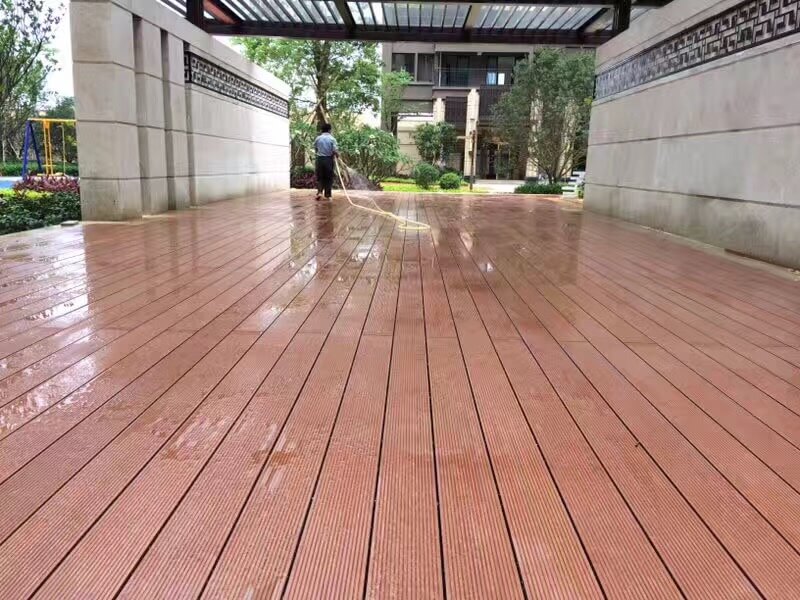
Pressure-washing limits vary between manufacturers. For example, Trex’s official care and cleaning guidance provides product-specific cleaning recommendations. Always check the instructions supplied with your exact decking product.
Capped vs. Uncapped Composite Decking Maintenance
Before choosing a maintenance method, identify the type of decking. Uncapped WPC exposes the wood-plastic composite at the surface, while capped decking adds a co-extruded polymer layer over three or four sides, depending on the product design.
The best approach to how to clean composite decking depends on whether the boards are capped or uncapped.
| Maintenance factor | Uncapped composite decking | Capped composite decking |
|---|---|---|
| Surface construction | Composite core remains exposed at the surface. | Protective polymer cap covers the surface and may cover three or four sides. |
| Spill response | Clean quickly because oils and tannins may be more difficult to remove. | Many spills remain on the cap and can be easier to wipe away promptly. |
| Routine cleaning | May require more frequent brushing in damp or heavily soiled conditions. | Often maintained with periodic soap-and-water cleaning. |
| Sanding | Possible only when specifically approved; appearance may change. | Normally unsuitable because sanding can remove the protective cap. |
| Primary focus | Prompt stain removal, drainage, airflow and regular debris removal. | Protecting the cap from scratches and avoiding incompatible chemicals. |

For a detailed product comparison, read capped vs. uncapped composite decking. You can also compare Bongywood’s traditional WPC decking and four-sided capped composite decking.
Seasonal Composite Deck Maintenance Checklist
A seasonal composite decking maintenance checklist helps prevent leaves, grease, pollen and moisture-related debris from building up into harder-to-clean residue.
Spring
- Clear winter debris from the deck and board gaps.
- Inspect drainage, fasteners and edge details.
- Complete a full soap-and-water cleaning.
- Check shaded areas for surface mold.
Summer
- Clean food, drink and barbecue spills promptly.
- Use protective pads under furniture and grills.
- Move plant pots occasionally to check trapped moisture.
- Rinse pool chemicals or saltwater splashes.
Autumn
- Remove wet leaves before they form compacted piles.
- Keep gutters and deck drainage paths open.
- Wash away pollen, soil and tannin residue.
- Inspect the substructure before winter.
Winter
- Use a plastic shovel rather than a metal-edged tool.
- Push the shovel parallel to the board direction where practical.
- Use only an approved de-icing product.
- Avoid chipping ice with sharp tools.
Composite Deck Cleancing Mistakes to Avoid
Knowing how to clean composite decking also means knowing what not to do. The most common problems come from harsh chemicals, abrasive tools, dried cleaner residue and uncontrolled pressure washing.
Do
- Clean spills promptly.
- Use non-metallic brushes and tools.
- Keep gaps and drainage points clear.
- Rinse cleaners thoroughly.
- Follow the board-specific warranty instructions.
Do not
- Let soap dry on the boards.
- Use wire brushes or abrasive pads.
- Mix bleach, acids or other chemicals.
- Sand a capped surface.
- Use uncontrolled high-pressure washing.
Frequently Asked Questions About Composite Decking Maintenance
What is the best way to clean composite decking?
Remove loose debris, rinse the boards, apply warm water and mild dish soap, scrub gently in the direction of the grain with a nylon-bristle brush, and rinse thoroughly before the solution dries.
If you are wondering how to clean composite decking after heavy rain or seasonal debris, start by removing loose organic material before washing the surface.
Can composite decking be sanded to remove a stain?
If it is Capped, NEVER sand it. Sanding will remove the protective layer and the wood-grain texture. For Uncapped boards, light sanding is sometimes possible but may leave a “bright spot” that takes time to weather.
Why is my deck getting moldy if it's "low-maintenance"?
Mold doesn’t grow on the composite material; it grows on the dirt and pollen that sits on the deck. Regular rinsing prevents this food source from accumulating.
How do you remove mold from composite decking?
Remove leaves, pollen and soil, then wash the area with warm water, mild detergent and a suitable nylon-bristle brush. Use a product-approved mold cleaner when soap is not sufficient, and correct drainage or airflow problems that allow debris to remain damp.
Can bleach be used on composite decking?
We recommend avoiding harsh bleach, bleach can over-whiten and weaken the wood fibers over time.
Can I use a power washer on my composite deck?
Yes, but keep the pressure below 1200 PSI and maintain a 30cm distance to avoid etching the material.
What is the best cleaner for composite decking?
For most situations, a mixture of mild dish soap and warm water is best. Avoid harsh chemicals or bleach, which can discolor the “shield” layer of capped decking.
Does composite decking need sealing or staining?
Most modern composite decking is designed not to require routine staining, oiling or sealing. Check the care guide for the exact product before applying any coating. Learn more in our guide to painting composite decking.
Final Thoughts: How to Clean Composite Decking Without Overcomplicating It
The best answer to how to clean composite decking is usually simple: remove loose debris, wash with a product-compatible cleaner, scrub gently, rinse thoroughly and treat spills before they age. Consistency matters more than aggressive cleaning.
A practical composite decking maintenance routine also includes keeping board gaps open, checking drainage, moving planters occasionally and adapting cleaning frequency to the local environment. Capped decking can make day-to-day stain removal easier, while traditional WPC may benefit from more frequent attention in damp or heavily soiled locations.
For additional manufacturer guidance on how to clean composite decking, see the TimberTech composite decking cleaning guide .
Need Composite Decking for Your Next Project?
Compare traditional and capped WPC decking, request product samples, or speak with the Bonywood team about profiles, colors, installation conditions and project requirements.