Choosing between capped and uncapped decking affects durability, appearance, maintenance and cost. In this guide, we compare capped vs uncapped composite decking to help homeowners, contractors, distributors and project buyers choose the right WPC decking for different outdoor applications.
Capped vs. Uncapped Composite Decking: Quick Comparison
Although both products use wood-plastic composite materials, their surface construction creates important differences in outdoor performance. The table below provides a practical overview.
| Comparison | Uncapped Composite Decking | Capped Composite Decking |
|---|---|---|
| Construction | Exposed WPC surface | WPC core with protective polymer cap |
| Moisture Resistance | Moderate | Higher surface protection |
| Stain Resistance | Moderate | Generally higher |
| Fade Resistance | May weather more noticeably | Better color-retention potential |
| Mold & Mildew | Requires more attention to cleaning | Easier-to-clean protective surface |
| Maintenance | Regular cleaning required | Lower-maintenance surface |
| Initial Cost | Generally lower | Generally higher |
| Best For | Budget-focused and moderate-exposure projects | Residential, commercial and demanding outdoor projects |
What Is Uncapped Composite Decking?
Uncapped composite decking, sometimes called traditional or first-generation WPC decking, is manufactured from a mixture of wood fibers, plastic and performance additives.
Because there is no separate protective polymer shell, the WPC material itself forms the exposed surface of the decking board. This means the composite surface comes directly into contact with sunlight, rainfall, dirt, food spills and other outdoor conditions.
Advantages of Uncapped WPC Decking
- Lower initial material cost
- Natural matte wood-like appearance
- Low maintenance compared with traditional timber
- No routine painting or staining required
- Suitable for many budget-conscious projects
Possible Limitations
- Greater exposure of the WPC core to moisture
- More sensitive to certain stains
- Surface weathering can become more noticeable
- May require more attention to regular cleaning
For available traditional WPC profiles, see our Classical WPC Decking collection.
What Is Capped Composite Decking?
Capped composite decking consists of a wood-plastic composite core protected by an additional polymer surface layer.
The protective layer is bonded to the WPC core during manufacturing, which is why capped decking is also commonly associated with co-extrusion composite decking.
Depending on the product design, the protective layer may cover three sides or all four sides of the decking board.
The primary purpose of the cap is to create an additional barrier between the WPC core and external conditions. A properly engineered capped surface can improve resistance to:
- Moisture
- Food and beverage stains
- UV-related color change
- Everyday outdoor weathering
- Surface dirt and contaminants
- Routine wear
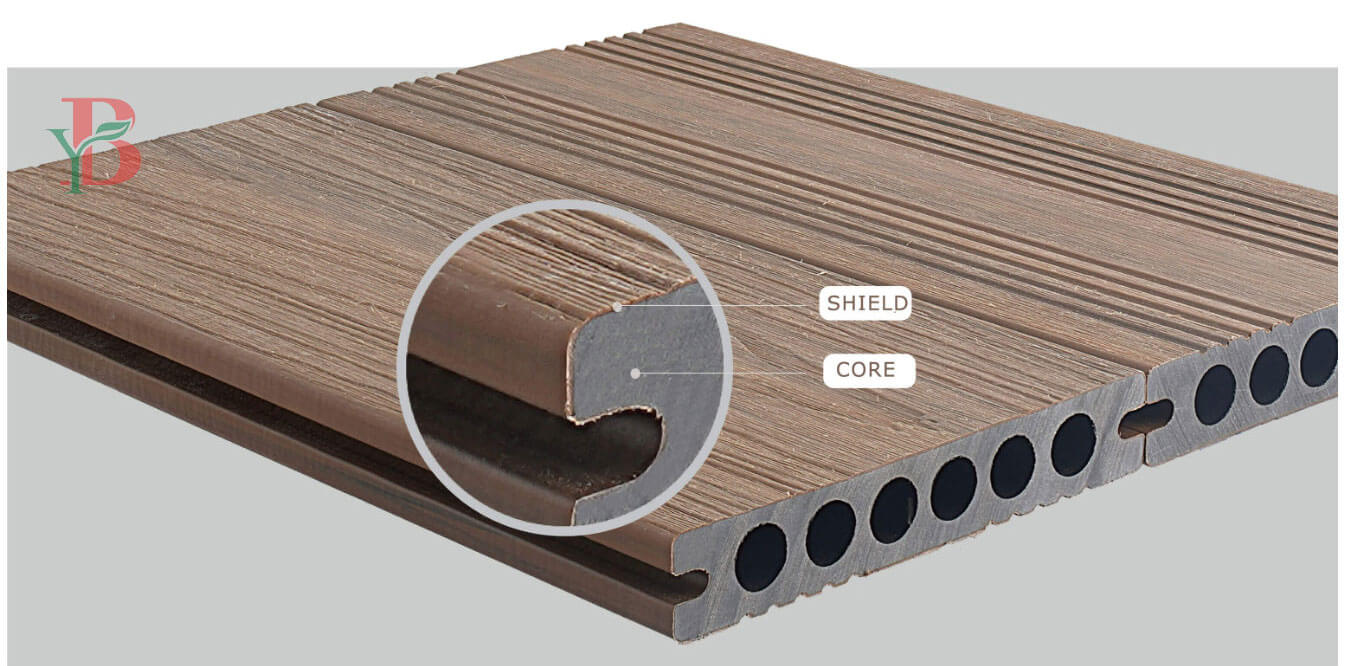
View Bongywood’s 4-sided capped composite decking for available profiles and product specifications.
Manufacturer’s Note
Capping Alone Does Not Determine Decking Quality
From a WPC manufacturing perspective, buyers should not evaluate a composite decking board based only on whether it is capped or uncapped. Core formulation, cap material, extrusion consistency, board structure, surface design, installation requirements and quality control can all influence long-term performance.
What Really Makes Capped vs Uncapped Composite Decking Different?
The comparison table above summarizes the main performance differences. In practice, the choice between capped vs uncapped composite decking usually comes down to surface protection, environmental exposure, maintenance requirements and long-term value.
Protective Surface Structure
Uncapped decking exposes the WPC material directly to the outdoor environment. Capped decking adds a polymer layer that protects the composite core from moisture, stains and weathering.
Performance in Wet Environments
When comparing capped vs uncapped composite decking for pools, humid climates or coastal environments, capped boards generally provide better surface protection because the WPC core has less direct exposure to moisture.
Maintenance Over Time
Both products require routine cleaning, but capped decking is usually easier to maintain because its protected surface resists stains and moisture more effectively.
Upfront Cost vs. Long-Term Value
Uncapped decking generally costs less initially. Capped decking costs more, but its improved surface protection and lower maintenance needs can provide better long-term value.
For cleaning and maintenance recommendations, see our Composite Decking Maintenance Guide .
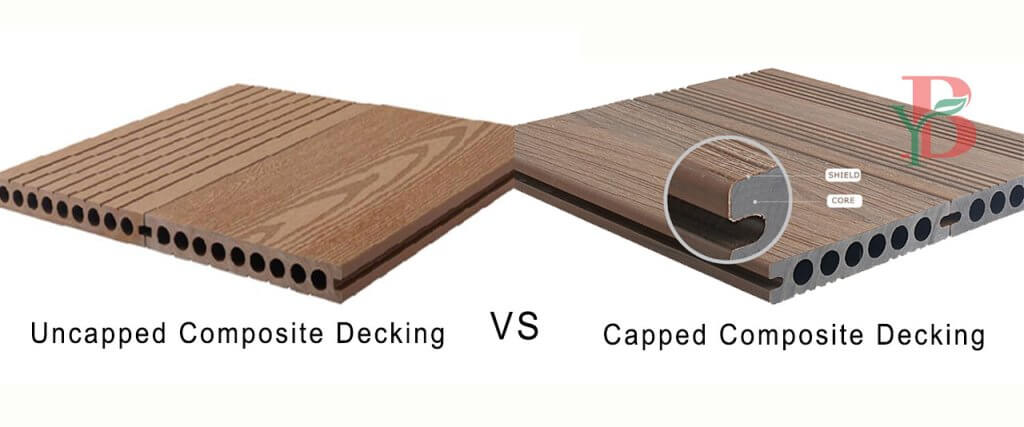
3-Sided vs. 4-Sided Capped Composite Decking
Not all capped composite decking is manufactured with the same cap coverage.
3-Sided Capped Decking
A 3-sided capped composite board generally protects the top and side surfaces while leaving part of the underside of the WPC core exposed.
4-Sided Capped Decking
A 4-sided capped board surrounds the WPC core on all four sides, including the underside, providing more complete surface coverage.
Four-sided protection can be particularly useful in humid or moisture-prone environments because more of the composite core is separated from the surrounding environment.
Should You Choose Capped or Uncapped Composite Decking?
For most buyers comparing capped vs uncapped composite decking, the decision depends on the installation environment and project budget.
Choose capped decking when moisture resistance, long-term appearance and easier maintenance are priorities. Choose uncapped decking when lower upfront cost is more important and environmental exposure is relatively moderate.
Choose Capped Composite Decking If:
- Long-term appearance is important
- The project is exposed to frequent rain or humidity
- The decking is used around a swimming pool
- The project is located in a coastal environment
- Food and drink spills are likely
- The deck will experience heavy foot traffic
- You want easier routine maintenance
Choose Uncapped Composite Decking If:
- Initial project budget is the main consideration
- Environmental exposure is relatively moderate
- The project does not require premium surface protection
- Some long-term surface weathering is acceptable
- You want a cost-effective alternative to timber
For most residential and commercial projects where long-term appearance, moisture resistance and easier maintenance are priorities, capped composite decking is generally the preferred option.
Uncapped decking, however, remains a practical solution when controlling initial material cost is more important and the installation environment is less demanding.
What Should Distributors, Contractors and Project Buyers Check?
For professional buyers, the word “capped” alone does not provide enough information to evaluate a composite decking product.
When comparing WPC decking manufacturers or suppliers, consider:
- Whether the cap covers three sides or four sides
- WPC core formulation
- Cap material and surface construction
- Board dimensions and profile
- Solid or hollow board structure
- Surface texture and color consistency
- Water absorption and relevant performance data
- Expansion and installation requirements
- Fastener and joist-spacing requirements
- Available test reports and certifications
- Quality-control procedures
- OEM, color and profile customization options
- Production capacity and delivery capability
These factors become especially important when comparing products from different manufacturers because two boards both marketed as capped composite decking can still differ significantly in construction and performance.
What About 3D Embossed Composite Decking?
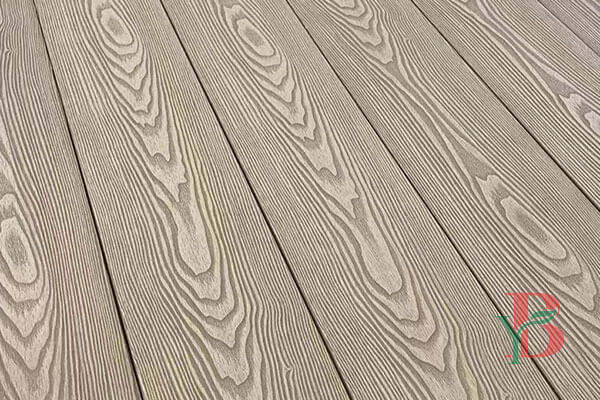
Capping and embossing describe different aspects of composite decking. Capping primarily concerns protective surface construction, while embossing describes the surface texture and wood-grain effect.
Buyers looking for a deeper, more natural wood-grain appearance can also explore 3D Embossed WPC Decking .
Capped vs. Uncapped Composite Decking: Final Verdict
There is no single decking type that is ideal for every project. When comparing capped vs uncapped composite decking, consider moisture exposure, maintenance expectations, appearance, initial cost and intended service life.
Choose capped composite decking when moisture protection, stain resistance, color retention and easier maintenance are important.
Choose uncapped composite decking when lower initial cost is the priority and the project is located in a relatively moderate environment.
Most importantly, do not make a purchasing decision based only on the capped or uncapped label. Material formulation, manufacturing quality, board design, installation and project conditions all contribute to long-term decking performance.
Related Composite Decking Resources
Need Capped Composite Decking for Your Project?
Bongywood supplies WPC decking for distributors, contractors, importers and outdoor construction projects. Explore available profiles, colors and 4-sided capped decking options for your market or application.
FAQs About Capped vs. Uncapped Composite Decking
What is the main difference between capped and uncapped composite decking?
The main difference between capped vs uncapped composite decking is the protective surface layer. Capped decking has an additional polymer cap around the WPC core, while uncapped decking exposes the composite material directly to the outdoor environment.
Is capped composite decking worth the additional cost?
For projects exposed to moisture, frequent spills, heavy traffic or demanding outdoor conditions, the additional surface protection of capped decking can provide better long-term value. For less demanding or highly budget-sensitive applications, uncapped WPC decking may still be suitable.
Can capped composite decking develop mold?
Yes. Mold and mildew can grow on dirt, leaves, pollen and other organic material that accumulates on almost any outdoor surface. A protective cap helps limit direct moisture penetration into the WPC core and usually makes surface cleaning easier, but periodic cleaning is still recommended.
Is 4-sided capped decking better than 3-sided capped decking?
Four-sided capping provides protective coverage around the entire WPC core, including the underside. This can be beneficial in humid or moisture-prone environments. However, cap coverage should be evaluated together with material formulation, manufacturing quality, board structure and installation requirements.
Does capped composite decking get hotter than uncapped decking?
Deck surface temperature is influenced by several factors, including color, direct sunlight, climate, material formulation and board design. Darker decking surfaces generally absorb more solar energy than lighter colors, whether the board is capped or uncapped.
Does capped decking get hotter than uncapped?
Heat absorption depends more on the color of the board than the cap. Darker colors in both categories will retain more heat than lighter shades.
Can capped and uncapped composite decking be installed together?
It may be possible in some projects, but the boards need compatible dimensions, profiles, joist-spacing requirements, fastener systems and expansion specifications. Their appearance and weathering characteristics may also differ, so compatibility should be confirmed before installation.
Is capped composite decking maintenance-free?
No outdoor decking should be considered completely maintenance-free. Capped composite decking generally requires less surface maintenance than traditional timber or uncapped WPC, but routine sweeping and periodic cleaning are still recommended.