
Choosing the right fastening system is one of the most important decisions in composite decking installation. When comparing face screws vs. hidden fasteners, the best choice depends on appearance, cost, board type, holding strength, installation method, and long-term maintenance. This guide explains the pros and cons of face screws and hidden fasteners for composite decking, helping homeowners, contractors, builders, and distributors choose the right fastening solution for a WPC deck project.
What Are Face Screws for Composite Decking?
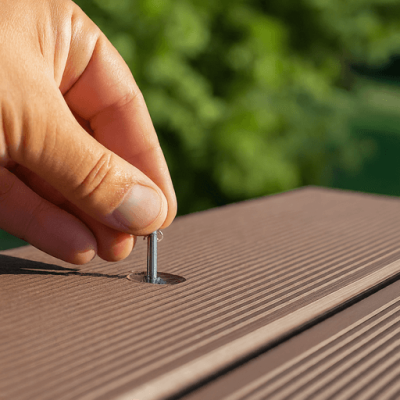
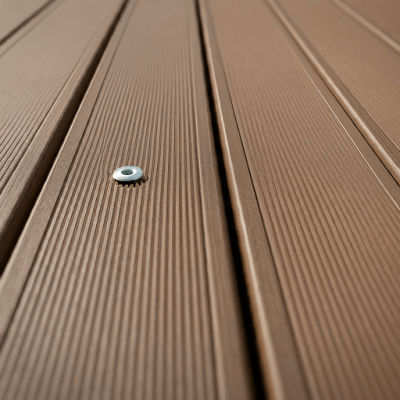
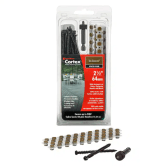
Face screws are the traditional fastening method for both composite and natural wood decking, that are driven directly into the deck boards from above. These screws are visible on the surface of the deck, providing a straightforward and secure method of installation.
In a face screws vs hidden fasteners comparison, face screws usually stand out for their strong direct holding power, simple installation, and lower material cost. They are commonly used on stairs, borders, ramps, perimeter boards, and high-load areas.
Advantages and Disadvantages of Face Screws
Advantages of Face Screws
- Strong holding power for stairs, borders, ramps, and commercial traffic areas.
- Easy installation with standard drilling tools.
- Lower material cost compared with clip-based fastening systems.
- Simple board removal and replacement during maintenance.
- Suitable for square-edge and solid-edge composite decking boards.
Disadvantages of Face Screws
- Visible screw heads may affect the appearance of the deck surface.
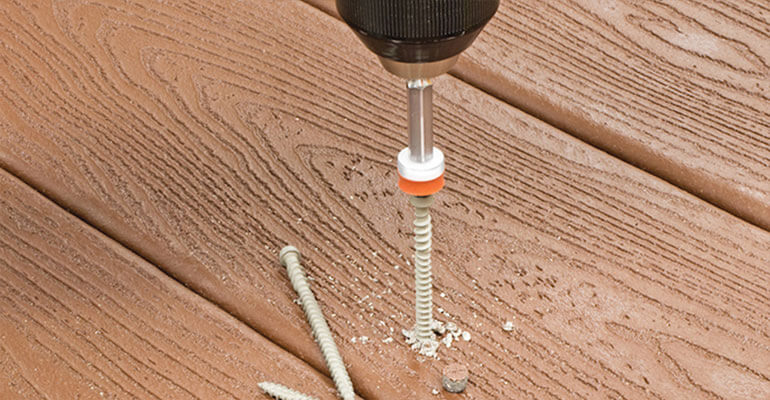
- Poor installation may cause mushrooming, cracking, or surface damage.
- Requires careful alignment to maintain a professional finish.
Face Screw Considerations
- Pre-drilling Requirements: Pre-drilled holes are generally necessary for most composite materials to prevent potential splitting or splintering that can occur when driving screws directly into the boards.
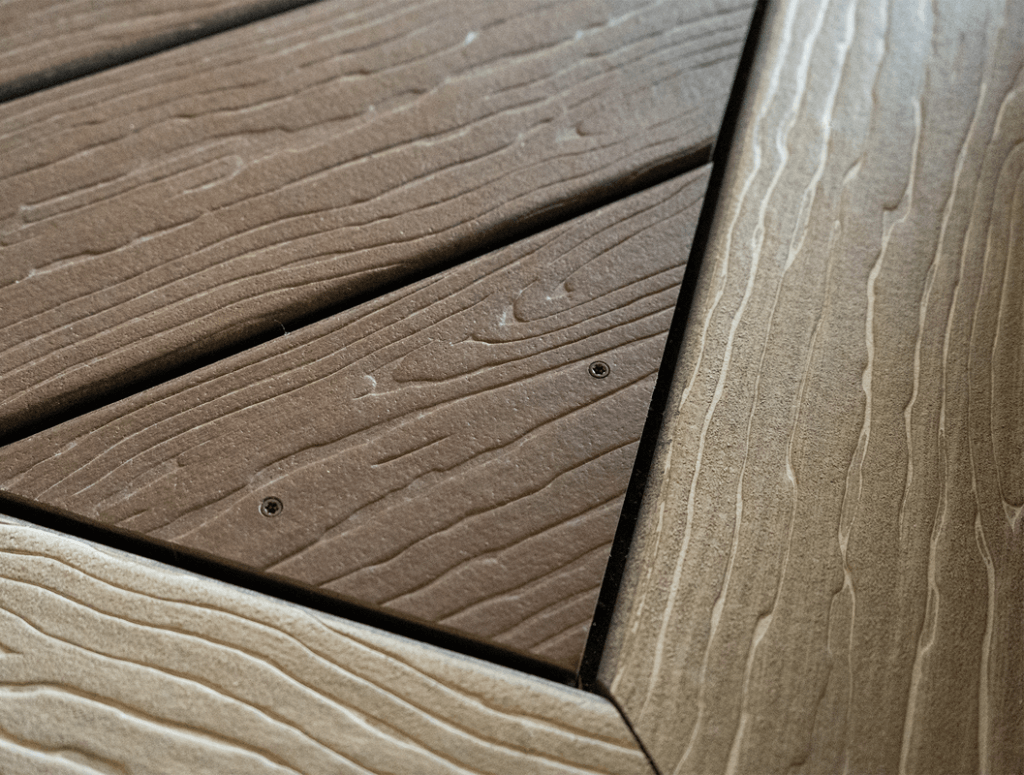
- Visual Impact: Visible screw heads affect the deck’s aesthetic appearance.
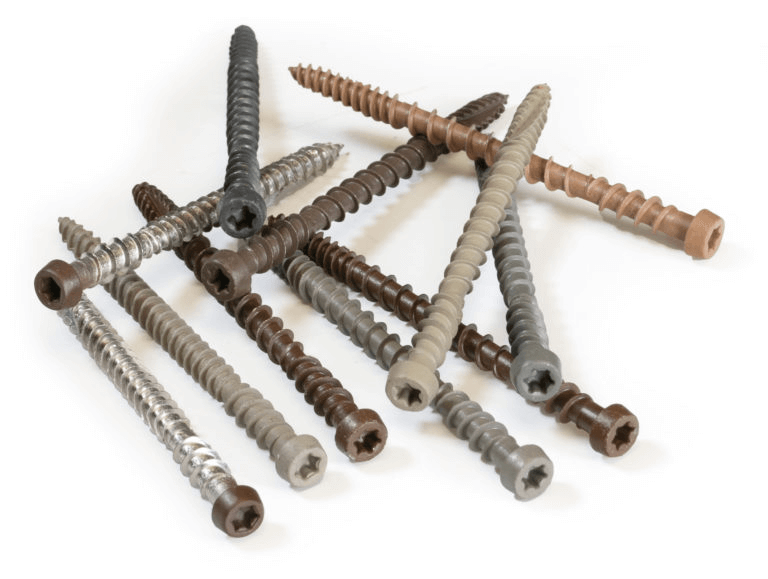
- Color-Matched Options: To minimize the visibility of fasteners, some suppliers provide screws that match the color of the surrounding deck surface, helping to conceal the fasteners for a more aesthetically pleasing deck.
Pro-Tip: The “Plug” Compromise
If you like the strength of screws but hate the look of metal heads, consider a plug system. This involves countersinking the screw and covering it with a small plug made from the exact same composite material, making the fastener nearly invisible.
What Are Hidden Fasteners for Composite Decking?
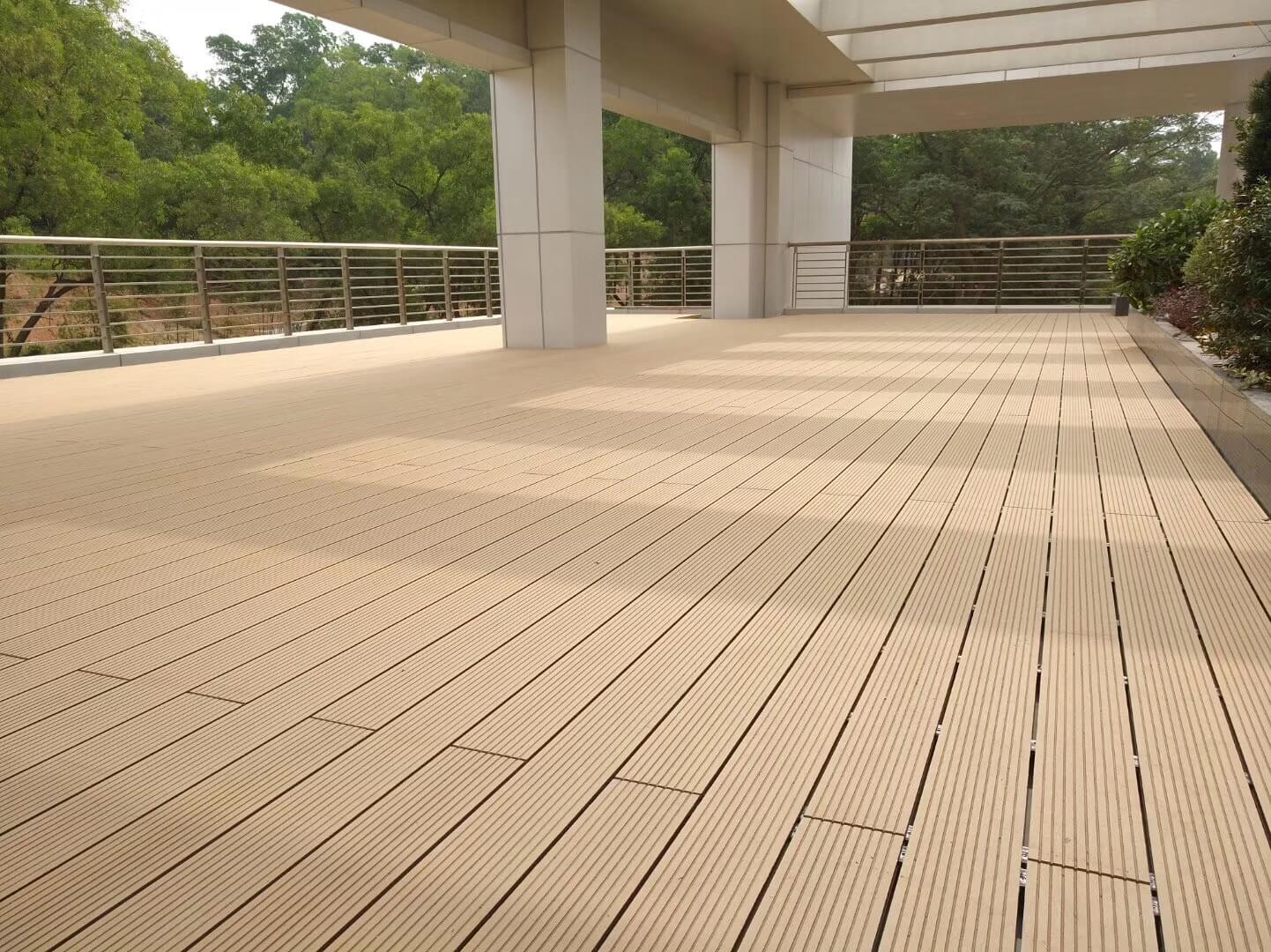
Hidden fasteners are clips or fastening systems installed between grooved composite decking boards. Instead of fixing boards through the top surface, hidden clips secure the board edges to the joists.
In the discussion of face screws vs. hidden fasteners, hidden fasteners are often preferred for premium residential decks, patios, poolside areas, and projects where a clean, screw-free surface is important.
Common types of Hidden Fasteners
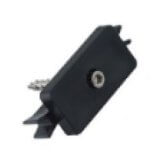
Plastic Clips
Cost-effective option for standard residential composite decking projects.
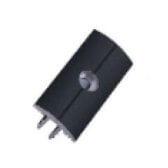
Aluminum Clips
Suitable for projects requiring improved strength and durability.
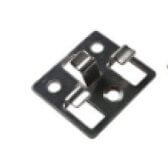
Stainless Steel Clips
Recommended for coastal, humid, or high-corrosion environments.
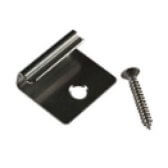
Start / End Clips
Used for the first and last boards to create a cleaner edge finish.
Advantages and Disadvantages of Hidden Fasteners
Advantages of Hidden Fasteners
- Clean, modern deck surface without visible screw heads.
- Better barefoot comfort for patios, balconies, and poolside decks.
- Consistent board spacing for drainage, ventilation, and thermal movement.
- Ideal for grooved composite decking boards.
Disadvantages of Hidden Fasteners
- Usually higher material cost than face screws.
- Often requires grooved composite decking boards.
- Installation requires accurate clip placement and board alignment.
- Not always ideal for stairs, ramps, borders, and high-load areas.
Hidden Fastening Considerations
- Higher Cost: Hidden fasteners are typically more costly than traditional face screws.
- Removal and Replacement: If a board needs to be replaced, removing it from hidden fasteners can be difficult without damaging the adjacent boards. This can make maintenance and repairs more challenging and costly.
- Limited Applications: hidden fasteners may not be suitable for all projects, such as stairs, picture frames, or boards with a radius bends due to their structural limitations.
Face Screws vs. Hidden Fasteners:Quick Comparison
The main difference between face screws vs hidden fasteners is the way the deck boards are secured. Face screws are driven through the top surface of the board, leaving visible screw heads. Hidden fasteners, on the other hand, are installed through side grooves or clips, keeping the deck surface clean and free from exposed screws. For budget-focused projects, face screws may be easier and faster to install. For premium composite decking projects, hidden fasteners are often preferred because they improve the final appearance and barefoot comfort of the deck surface.
The table below gives a clear comparison of face screws vs. hidden fasteners for composite decking projects.
| FEATURE | Face Screws | Hidden Fasteners |
|---|---|---|
| Aesthetic | Visible screw heads (can be distracting unless plugged) | Clean, seamless "screw-free" look |
| Barefoot Safety | Potential for snags or hot screw heads | 100% safe and smooth surface (ideal for kids/pets) |
| Cost | Low / Budget-friendly | Premium pricing (material + specialized clips) |
| Installation | Quick and straightforward for DIY | Efficient with spacing clips; requires grooved boards |
| Structural Grip | Maximum stability; prevents warping/shifting | Moderate to High; allows for natural thermal expansion |
| Best Used For | Solid boards, stairs, ramps, and perimeters | Main deck surface, pool areas, and grooved boards |
Need Help Choosing the Right Composite Decking Fastener?
Send us your board type, project location, installation environment, and application area. Bongywood WPC can recommend compatible screws, clips, and WPC decking accessories.
Best Fastener for Different Composite Decking Applications
In real projects, face screws vs. hidden fasteners should be decided according to the deck area rather than by appearance alone. Some areas need stronger direct holding power, while others require a cleaner and more comfortable surface.
| Deck Area | Recommended Fastener | Reason |
|---|---|---|
| Main deck surface | Hidden fasteners | Creates a clean surface with consistent board spacing. |
| Stairs | Face screws or plug system | Provides stronger board retention in high-load areas. |
| Poolside deck | Hidden fasteners | Improves barefoot comfort and reduces visible hardware. |
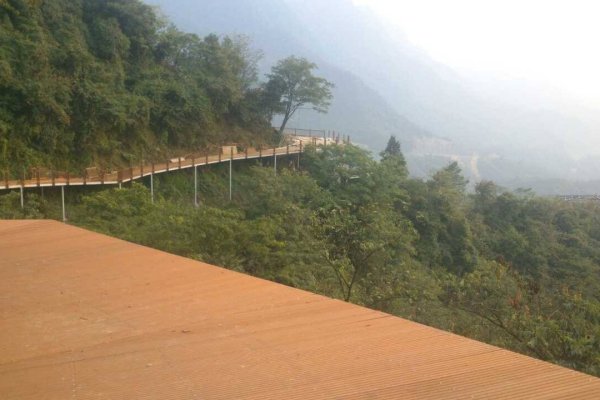
| Commercial walkway | Face screws or stainless steel clips | Better suited for frequent traffic and stronger fastening requirements. |
| Perimeter boards | Face screws or plug system | Provides better edge control and board stability. |
| Grooved WPC boards | Hidden clips | Designed for side-groove installation. |
| Square-edge boards | Face screws | Easier and more secure for direct top fastening. |
Installation Tips for Composite Deck Fasteners
Proper installation is essential for long-term deck performance. Whether you choose face screws or hidden fasteners, always follow the composite decking manufacturer’s installation guide.
For more practical installation advice, read our guide: 8 WPC Decking Installation Secrets for 3x Longer Lifespan .
Use the Right Fastener Material
Use stainless steel fasteners in coastal, humid, or high-corrosion environments to reduce rust and improve long-term durability.
Pre-Drill When Needed
When using face screws near board ends or edges, pre-drilling can help reduce mushrooming, splitting, and surface damage.
Keep Consistent Board Spacing
Proper spacing allows for drainage, ventilation, and thermal expansion of composite decking boards.
Use Start and End Clips Correctly
For grooved composite decking, start and end clips help secure the first and last boards while maintaining a cleaner edge appearance.
Reinforce Stairs and Borders
Stairs, ramps, and perimeter boards often require stronger fastening. Face screws or plug systems are commonly recommended for these areas.
Check Joist Alignment
Uneven joists can affect board stability, clip performance, and the final appearance of the deck surface.
Face Screws vs Hidden Fasteners: Which Should You Choose?
There is no single answer for every composite deck. The correct choice depends on whether your priority is appearance, structural strength, budget, easy maintenance, or compatibility with grooved boards.
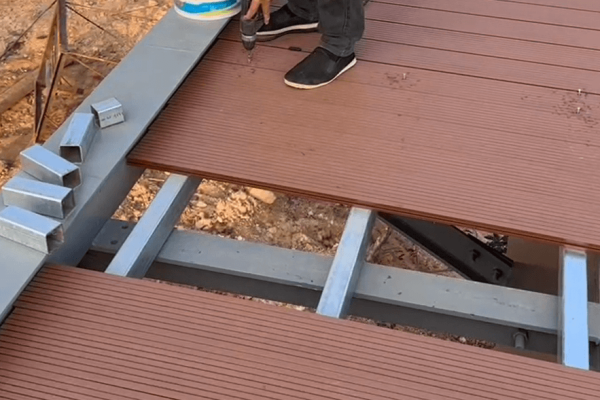
Choose Face Screws If:
You need maximum direct holding strength.
You are installing stairs, borders, ramps, or perimeter boards.
You want a lower-cost fastening option.
You need easier board removal and replacement.
You are using square-edge composite decking boards.
Choose Hidden Fasteners If:
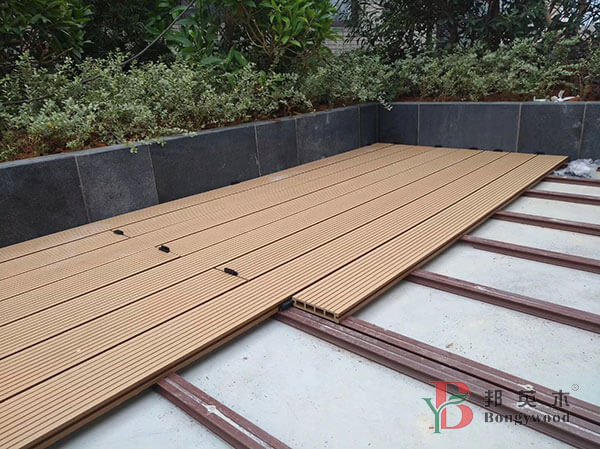
You want a clean, screw-free deck surface.
You are installing grooved composite decking boards.
You are building a premium residential deck, patio, or poolside area.
You want consistent board spacing.
Appearance and barefoot comfort are top priorities.
Frequently Asked Questions About Face Screws vs Hidden Fasteners
Is it better to use face screws or hidden fasteners for composite decking?
It depends on your priorities. Hidden fasteners provide a clean, modern aesthetic without visible screw heads, making them safer for bare feet. However, face screws offer stronger board retention and are generally 20-30% cheaper than hidden systems.
Are hidden fasteners more expensive than face screws?
Yes. On average, hidden fastener systems cost more per square foot due to the specialized clips and the requirement for grooved-edge boards. Installation labor can also be slightly higher for certain clip systems compared to traditional top-down screwing.
Can you use face screws on grooved composite boards?
While possible, it is not recommended. Face screws are best used on solid-edge boards. For grooved boards, hidden fasteners are designed to fit perfectly into the side channels, providing a more professional and stable finish.
Do hidden fasteners hold as well as face screws?
High-quality hidden fasteners (like stainless steel clips) provide excellent hold for standard deck layouts. However, for high-traffic areas, stairs, or picture-frame borders, face screws (or plug systems) are often preferred for their superior “shear strength” and ability to prevent board shifting.
What fasteners are best for grooved composite decking?
Grooved composite decking is usually best installed with hidden fastener clips. These clips fit into the side grooves of the boards and create a clean surface without visible screw heads.
Should I pre-drill composite decking before using face screws?
In many cases, pre-drilling is recommended when using face screws on composite decking. It helps reduce mushrooming, cracking, and surface damage, especially near board ends or edges.
What is the best choice in a face screws vs. hidden fasteners comparison?
For the main deck surface, hidden fasteners are usually the better choice for appearance and comfort. For stairs, borders, ramps, and stronger board retention, face screws or plug systems are often better.