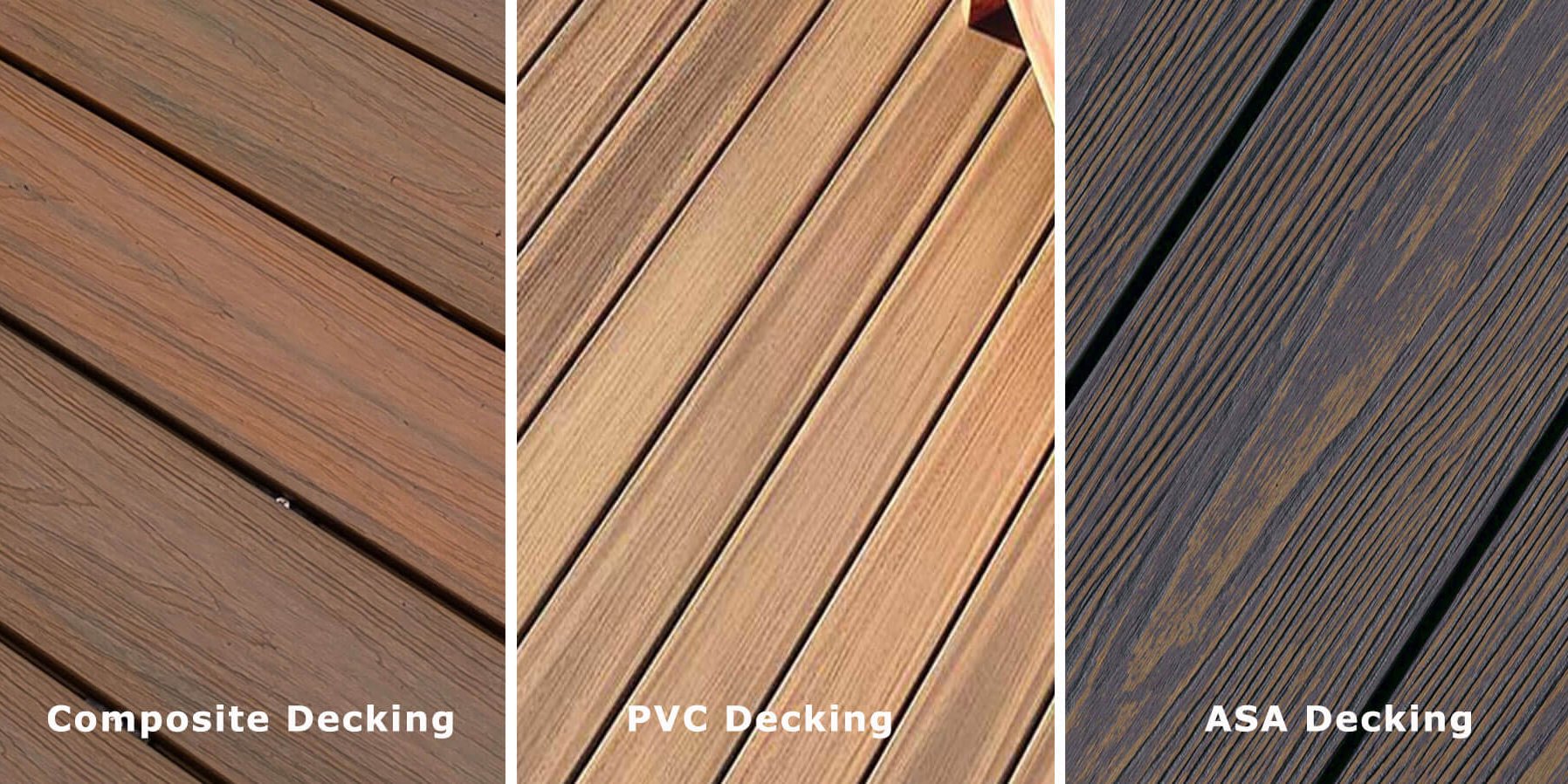
When building or renovating a deck, choosing the right material can be a tough decision. The three most popular options are composite decking, PVC decking, and ASA decking. While all three are designed for durability, low maintenance, and long-lasting beauty, each material has unique benefits and potential drawbacks. This decking comparison breaks down the three industry leaders—Composite vs PVC vs ASA decking—to help you determine which delivers the best value for your home.
Quick Answer: Which Decking Material Is Best?
If you want a fast answer, here is a simple overview:
- Best for natural wood appearance: Composite decking
- Best value for general residential projects: Composite decking
- Best for wet environments: PVC decking
- Best for strong UV and color stability: ASA decking
- Best for premium outdoor performance: ASA decking
There is no single material that is perfect for every situation. The best decking material depends on whether your priority is appearance, price, waterproof performance, heat resistance, or long-term weatherability.
What Is Composite Decking?
Composite decking is typically made from a blend of recycled wood fibers and recycled plastic. It is designed to offer the look of wood with lower maintenance and better durability than traditional timber
For many buyers, composite decking is the most familiar alternative to wood because it provides a warmer, more natural appearance. It is especially popular in residential outdoor spaces such as backyards, gardens, terraces, and entertainment decks.
Pros of Composite Decking
- Natural wood-like texture and appearance
- Available in many colors and embossed surface finishes
- Lower maintenance than traditional wood
- Good balance between cost and performance
- Suitable for a wide range of residential projects
- Eco-friendly (recycled wood fibers and plastics)
Cons of Composite Decking
- Heat Retention under direct sunlight
- Lower moisture resistance compared to PVC decking
- Lower-end products may fade or stain faster over time
- Some products may expand and contract more noticeably in changing weather
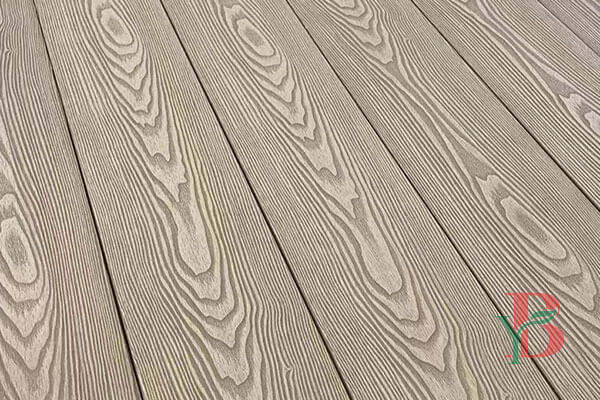
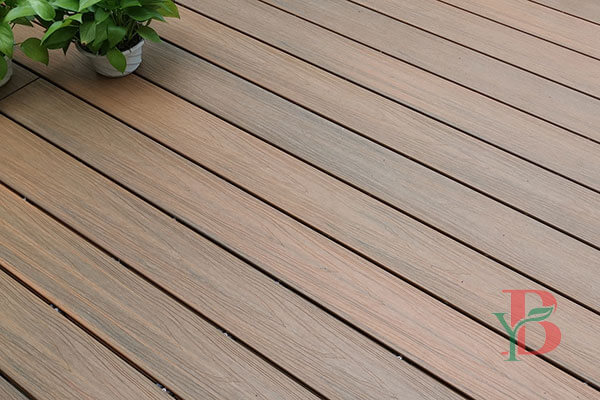
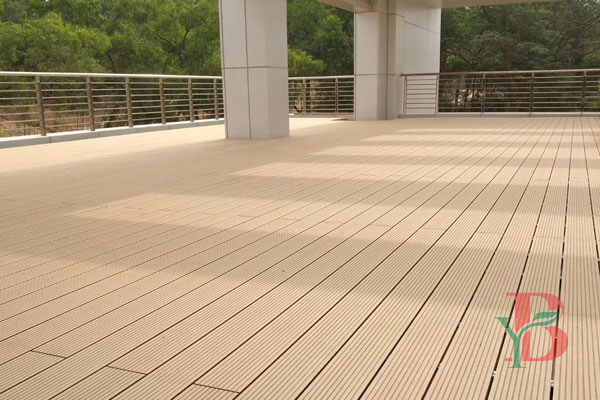
Bongywood WPC has developed a variation collection of wood plastic composite decking which offers the aesthetic of natural timber and the benefits of long-lasting beauty with minimal maintenance, you will have many colors and grain patterns to choose from that you are sure to be happy with your choice.
What Is PVC Decking?
PVC decking is made entirely from polyvinyl chloride (PVC) plastic. This decking option is 100% plastic, meaning it’s highly resistant to water, mold, mildew, rot and insects. PVC decking is known for its clean, modern look and low-maintenance, it also does not require staining or sealing.
Compared with composite decking, PVC decking is generally lighter in weight and more resistant to water absorption. It is widely used in areas where decks are exposed to frequent rain, humidity, or splashing water.
Pros of PVC Decking
- Excellent waterproof performance
- Resistant to rot, mold, and insect damage
- Low maintenance and easy to clean
- Lightweight compared with many composite options
- Good choice for wet or humid environments
Cons of PVC Decking
- May feel less natural in texture and appearance than composite options
- Heat Retention: Like composite decking, PVC can become hot in direct sunlight.
- Expands/contracts more with temperature changes
- Premium PVC products can be relatively expensive
What Is ASA Decking?
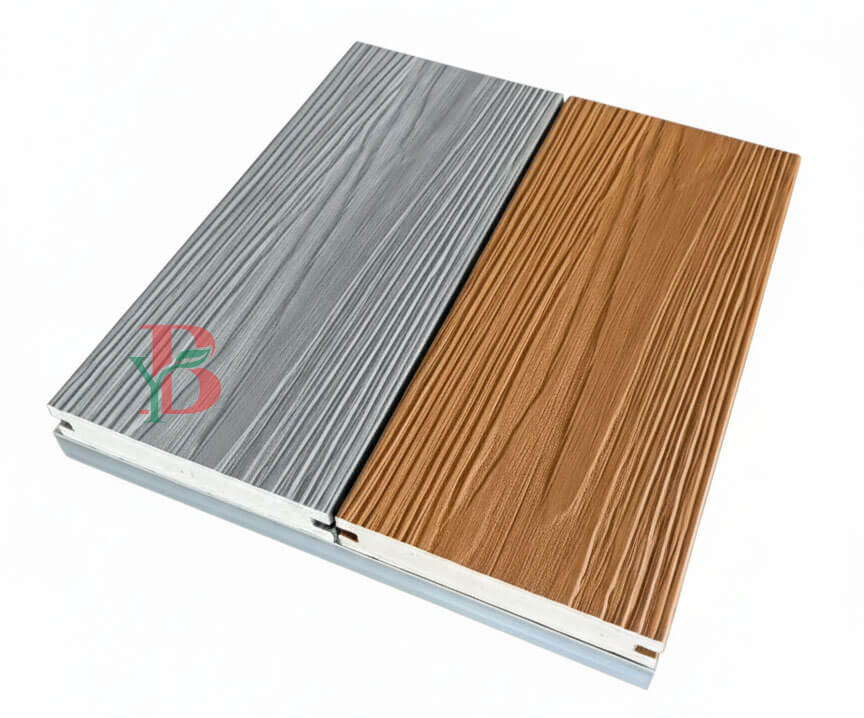
ASA (Acrylonitrile Styrene Acrylate) decking is the newest innovation in the market. It utilizes a high-grade engineering plastic known for its incredible weatherability. ASA decking has quickly become popular due to its superior color retention, UV resistance, and scratch resistance. It provides the look of natural wood with all the benefits of synthetic materials.
In recent years, ASA decking has attracted growing attention from distributors, builders, and importers who want a product positioned above standard composite decking in outdoor durability and appearance retention.
Pros of ASA Decking
- Excellent UV resistance
- Strong color stability in long-term outdoor exposure
- Good resistance to fading, chalking, and weather aging
- Premium surface appearance
- Performs well in hot, sunny, or demanding climates
Cons of ASA Decking
- Higher upfront cost than many standard composite products
- Premium positioning may not fit all budget-sensitive projects
- Product quality varies by manufacturer and formulation
- Not all ASA decking products are identical in structure or performance
Best Uses for ASA Decking
ASA decking is often the best option when long-term outdoor performance is more important than low initial cost. It is particularly suitable for:
- Hot and sunny climates
- High-end residential projects
- Commercial outdoor spaces
- Premium landscape and terrace projects
- Buyers who want better color retention and reduced fading over time
If your market places high value on durability, premium finish, and long-term weather resistance, ASA decking is often the strongest candidate.
Decking Comparison Table: Composite vs. PVC vs. ASA
| Feature | Composite | PVC | ASA |
|---|---|---|---|
| Material | Wood fibers and plastic | 100% PVC plastic | Acrylonitrile Styrene Acrylate (ASA) blend |
| Durability | Very durable, resists fading, may scratch | Extremely durable, resistant to moisture/wear | Extremely durable, resistant to fading/scratches |
| Maintenance | Low maintenance, occasional cleaning | Very low maintenance, easy to clean | Very low maintenance, easy to clean |
| Moisture | Good, but not completely waterproof | Excellent, completely water-resistant | Excellent, resistant to water and mold |
| UV Resistance | Moderate, can fade over time | Good, may fade over extended periods | Excellent, does not fade under sunlight |
| Aesthetic | Wood-like finish, traditional look | Sleek, modern, may look synthetic | Natural texture and wood-like appearance |
| Heat | Can get hot under direct sunlight | Can get hot under direct sunlight | Generally better heat resistance than PVC |
| Price | More affordable than PVC/ASA | Typically more expensive than composite | Generally the most expensive option |
| Environmental | Often made with recycled materials | Limited benefits, primarily synthetic | Limited benefits, primarily synthetic |
Which Decking Material Is Best for Different Applications?
COMPOSITE
The most balanced option for standard residential decks. It offers a natural wood look with high durability and reasonable pricing, making it ideal for homeowners who want visual appeal without the maintenance burden of real wood.
PVC
One of the strongest choices for poolside applications due to its 100% waterproof performance and ease of cleaning. In areas where splashing water, high humidity, and mildew resistance are critical, PVC has a clear advantage.
ASA
Preferred for strong sun exposure due to its excellent UV resistance and long-term color stability. It is the superior choice for upscale hospitality or commercial environments where maintaining a premium brand image is a priority.
Cost Comparison: Which Decking Material Offers the Best Value?
When buyers compare decking materials, they often focus too much on initial price and not enough on long-term value.
Composite Decking
Positioned in the mid-range, it offers the best overall value. Ideal for projects that require an attractive appearance and solid durability without reaching the highest price point.
PVC Decking
More expensive than standard composite, especially for top-tier brands. However, in wet environments, the long-term maintenance savings and lifespan often justify the higher initial investment.
ASA Decking
Usually carries the highest upfront cost among the three. It offers the best long-term value in demanding climates due to its unmatched weather resistance and long-lasting appearance retention.
Heat, UV, Water, and Maintenance: What Matters Most?
Durability Factors
Water: PVC leads with the strongest waterproof profile, while capped composites also perform excellently.
UV: ASA decking has a clear advantage in long-term sun exposure, valued for superior color retention and resistance to weather-related aging.
Thermal Comfort
No material stays completely cool in direct summer sun. Real-world performance is affected by material composition, board structure, and color. Darker colors tend to retain more heat across all categories. Buyers should evaluate specific product designs.
Care & Upkeep
All three materials require far less work than traditional wood:
- Composite: Low maintenance.
- PVC: Very low maintenance.
- ASA: Low maintenance with peak appearance retention.
* Regular cleaning is recommended for all types.
How to Choose the Best Decking Material for Your Market
If you are a homeowner, your decision may depend mainly on design preference and budget. But if you are a distributor, builder, importer, or project contractor, your decision should also consider:
- Local climate conditions
- Customer expectations
- Price positioning
- Installation environment
- Long-term product reputation
- Warranty and supplier support
For example:
- If your customers prefer a natural wood look at a reasonable cost, choose composite decking.
- If your market has many wet or coastal projects, consider PVC decking.
- If your clients want premium outdoor products for high-UV or high-end projects, ASA decking may be the best solution.
The right material is not just the one with the best technical features, but the one that fits the needs of your market.
FAQ About Composite vs PVC vs ASA Decking
Which is better: composite or PVC decking?
Neither is universally better. Composite decking is often better for natural appearance and value, while PVC decking is often better for waterproof performance and low maintenance in wet areas.
Is ASA decking better than composite decking?
ASA decking can outperform standard composite decking in UV resistance, color stability, and long-term weather durability. However, composite decking may still be the better choice for budget-sensitive projects or buyers who prefer a more wood-like look.
Which decking gets hottest in the sun?
All decking materials can become hot under direct sunlight, especially dark-colored boards. Surface color, board design, and ventilation all affect heat build-up. Buyers should evaluate actual product samples whenever possible.
Which decking is most resistant to mold and mildew?
PVC and ASA decking are generally more resistant to mold and mildew because they absorb less moisture. Composite decking can also perform well, especially capped composite decking, but lower-grade or uncapped products may be more likely to develop mold if exposed to trapped moisture and poor maintenance.
Which decking material offers better fire resistance: composite, PVC, or ASA?
Fire resistance depends on the product formulation, additives, and test certification. In general:
- Composite decking may have lower fire resistance than PVC or ASA because many products contain wood fiber.
- PVC decking is often more fire-resistant than standard composite decking, though it can still deform under extreme heat.
- ASA decking may offer good fire-performance potential in certain formulations, but actual ratings vary by manufacturer and product design.
For any project with fire-related requirements, always check the official fire rating and local building codes before making a decision.
Is there a significant difference in thermal expansion between these materials?
Yes, composite decking generally has a lower thermal expansion coefficient compared to PVC, making it less susceptible to warping in high temperatures. PVC can expand significantly under heat, which may lead to structural issues over time.
Which decking material lasts the longest?
Product quality, formulation, installation, and climate all affect service life. In demanding outdoor conditions, premium ASA decking and high-quality PVC decking are often chosen for their strong durability, while quality capped composite decking can also provide long-lasting performance.
Which decking is the best for low maintenance?
PVC decking and ASA decking are both strong low-maintenance options. Composite decking is also low maintenance compared with wood, especially when using high-quality capped products.
In a decking comparison, which is most eco-friendly?
- Composite decking is typically considered the most eco-friendly option because it’s made from recycled wood fibers and plastics.
- PVC decking is made entirely from plastic, which can be less environmentally friendly.
- ASA decking is also a plastic-based material, but its environmental impact will depend on the manufacturing process.
Which decking material is best for distributors and builders?
That depends on the target market. Composite decking is often best for broad market demand and value positioning. PVC decking is suitable for moisture-focused applications. ASA decking is a strong premium option for buyers seeking better weatherability and product.
Conclusion: Which Should You Choose?
-
Choose Composite if you value a natural wood aesthetic and environmental sustainability.
-
Choose PVC if you prioritize water resistance and a clean, modern look for wet areas.
-
Choose ASA if you want the ultimate premium performance and the highest protection against sun damage.
For in-depth comparisons and insights, refer to the following sources:
💬Looking for the right decking material for your market or project?
Whether you need composite decking, PVC decking, or ASA decking, our team can help you compare options based on climate, budget, design preference, and application. Contact us for product recommendations, samples, and wholesale pricing.