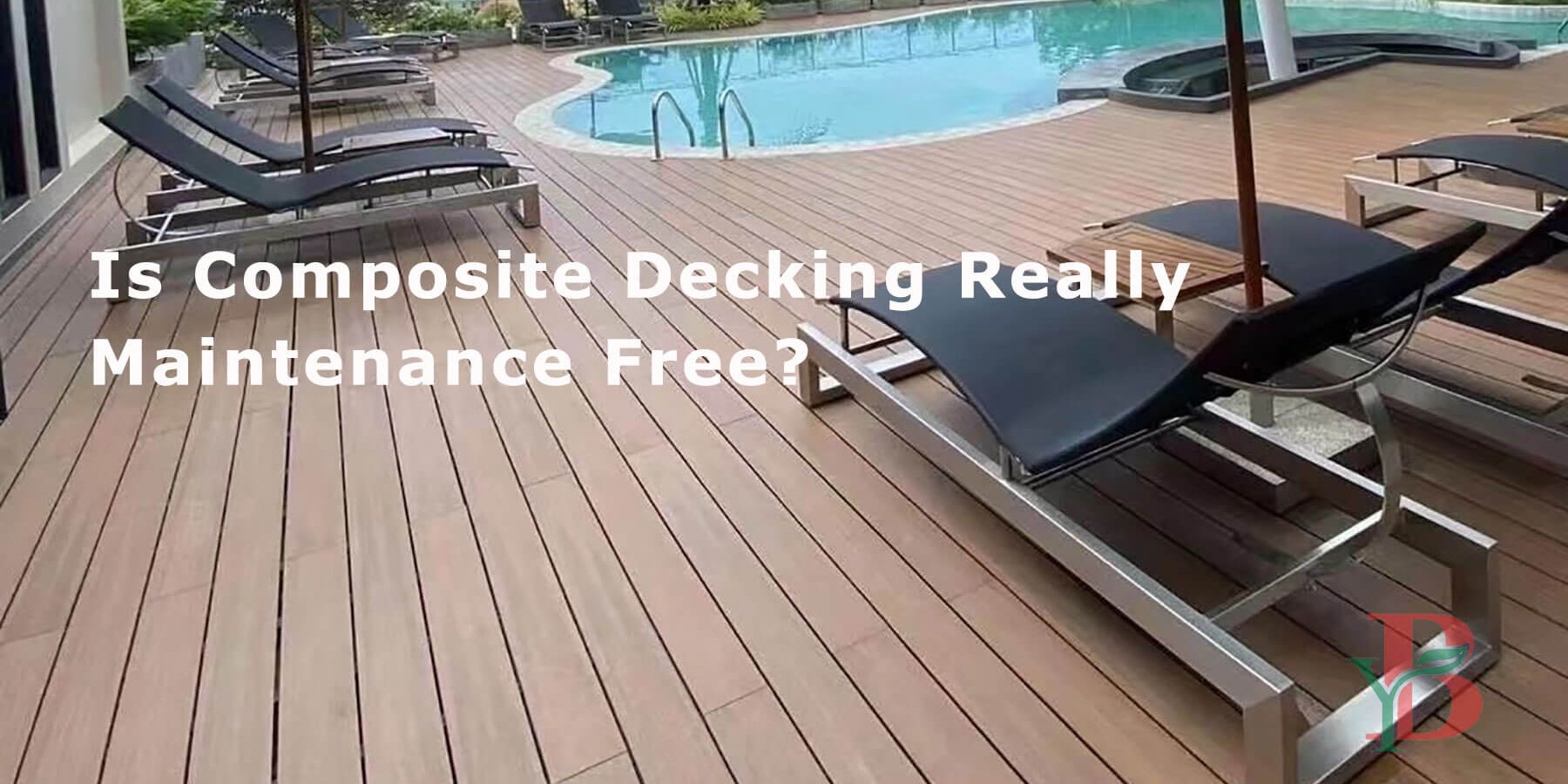
Everything exposed to outdoor elements requires proper care—and composite decking is no exception. While marketed as low-maintenance, understanding the right composite decking maintenance procedures is crucial for protecting your investment and ensuring its beauty lasts for decades.
In this guide, we’ll cover everything from basic cleaning to the technical differences between capped and uncapped boards.
Capped vs. Traditional Uncapped Composite Decking: What’s the Difference?
Before diving into maintenance, it is essential to understand which type of deck you have. Composite decking has evolved significantly, and the way you care for it depends on its construction.

-
Traditional Uncapped Composite Decking
Early generations of WPC (Wood Plastic Composite) are “uncapped,” meaning the composite material is exposed on all sides.
- Pros: Lower initial cost.
- Maintenance Challenge: Since the wood fibers are exposed, they are more susceptible to moisture absorption, deep-seated stains, and mold growth. They often require more frequent and intensive cleaning.
-
Capped Composite Decking (The Modern Standard)
Capped decking, like our Bongywood Capped Composite Decking, features a high-performance polymer “shield” that covers the core.
- Pros: Superior resistance to fading, scratching, and staining.
- Maintenance Advantage: The capped surface prevents liquids and mold spores from penetrating the material. Most spills can be wiped away with just soap and water.
-
Comparison at a Glance
| Feature | Uncapped Composite | Capped Composite |
|---|---|---|
| Surface Protection | None (Exposed wood-plastic) | 360° Polymer Shield |
| Stain Resistance | Low (Absorbs oils/tannins) | High (Wipe-clean surface) |
| Mold Resistance | Moderate (Porous) | Excellent (Non-porous) |
| Fade Resistance | May fade over time | Advanced UV protection |
| Cleaning Effort | High (Requires scrubbing) | Minimal (Soap & water) |
Essential Maintenance Procedures for Uncapped Composite Decking
Traditional uncapped composite decking features exposed wood fibers on the surface. Because it lacks a protective polymer shield, it is more porous and requires a more diligent cleaning routine to prevent long-term staining and organic growth.
1. Safe Pressure Washing Guidelines
For uncapped boards, pressure washing can be an efficient way to clean composite decking, but it must be done with caution to avoid surface damage.
- Pressure Limit: Ensure the pressure washer is set no higher than 8Kpa (1200 psi).
- Safe Distance: Maintain at least 30cm (12 inches) between the nozzle and the deck surface.
- Technique: Always spray in the direction of the grain to prevent marking.
2. Routine Sweeping and Drainage Management
Since uncapped decking absorbs moisture more easily:
-
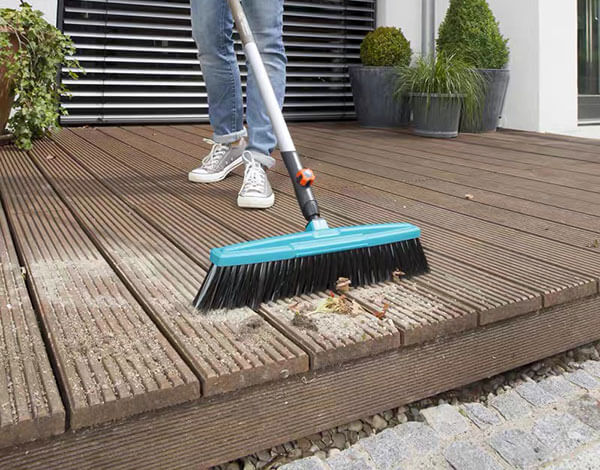
Daily Sweeping: Use a firm-bristled broom to remove organic debris (pollen, leaves, dirt). If left to sit, these particles can decompose and cause deep-seated mold within the wood fibers.
-
Gap Cleaning: Ensure the spaces between planks are clear. Poor airflow and standing water are the primary enemies of traditional WPC decking.
3. Common Maintenance Challenges & Solutions
| Challenge | Professional Solution |
|---|---|
| Water Stains | Temporary phenomenon on new decks; usually disappears naturally within 1-2 months. |
| Oil & Grease | Blot immediately with an absorbent cloth. Clean with a commercial degreaser or warm soapy water. |
| Scratches | Minor abrasions fade with weathering. For deeper scratches, contact the manufacturer before sanding. |
| Ice & Snow | Use calcium chloride or rock salt to melt ice. Avoid metal shovels that can scratch the surface. |
| Mold & Mildew | Clean with mild dishwashing detergent and a soft sponge. Never use cleaners containing bleach. |
Simplified Capped Composite Decking Maintenance
For homeowners with Capped Composite Decking, the composite decking maintenance process is significantly easier. The advanced 360° shield acts as a permanent barrier against the elements.

PROTECTIVE SHIELD
Capped composite decking refers to the protective outer layer or cap that is typically made of a high-performance polymer. This cap shields all four sides around its inner WPC core from the elements, making the decking even more resistant to staining, fading, and general wear and tear.
COMPOSITE CORE
The core is from Bongywood wood plastic composite materials, which uses recycled plastic and recycled wood.
-
Stain Resistance: Spills like wine or oil sit on top of the shield rather than soaking in. A simple wipe with a damp cloth is often all that’s needed.
- No Deep Scrubbing Required: Because the surface is non-porous, mold and mildew cannot easily take root. A seasonal wash with soap and water is sufficient to maintain its “like-new” appearance.
-
No Sanding or Sealing: Unlike traditional wood or some uncapped composites, the color is locked in, and the surface never needs refinishing.
FAQ: Expert Answers for Deck Care
Can I sand my composite deck to remove a stain?
If it is Capped, NEVER sand it. Sanding will remove the protective layer and the wood-grain texture. For Uncapped boards, light sanding is sometimes possible but may leave a “bright spot” that takes time to weather.
Why is my deck getting moldy if it's "low-maintenance"?
Mold doesn’t grow on the composite material; it grows on the dirt and pollen that sits on the deck. Regular rinsing prevents this food source from accumulating.
Is it okay to use bleach?
We recommend avoiding harsh bleach, bleach can over-whiten and weaken the wood fibers over time.
Can I use a power washer on my composite deck?
Yes, but keep the pressure below 1200 PSI and maintain a 30cm distance to avoid etching the material.
What is the best cleaner for composite decking?
For most situations, a mixture of mild dish soap and warm water is best. Avoid harsh chemicals or bleach, which can discolor the “shield” layer of capped decking.
How do I remove mold from my WPC deck?
Use a dedicated deck cleaner or a mild detergent. Regular sweeping to remove pollen and organic debris is the best way to prevent mold growth in damp, shaded areas.
Bottom Line
While composite decking maintenance is significantly lower than traditional wood (no sanding or staining required!), it is not maintenance-free. By following these simple steps, you ensure your composite deck remains a beautiful, functional part of your home for years to come.
Ready to upgrade your outdoor space? [Contact Bongywood today for a free quote on high-durability WPC decking solutions.]