
Installing a composite deck is a significant investment in your home’s value. However, without accounting for thermal expansion and contraction, even the best materials can succumb to warping or unsightly gaps. Breaker boards (also known as transition boards) are the professional solution for managing WPC decking installation challenges. In this guide, we’ll explain why breaker boards are superior to traditional butt joints and provide a technical walkthrough for a flawless finish.
What is a Breaker Board in Decking?
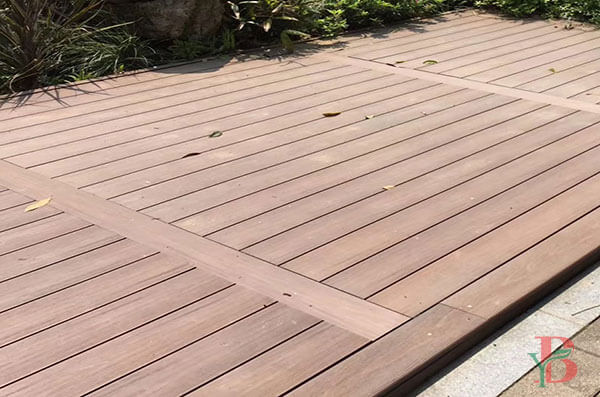
A breaker board is a perpendicular board that is used to break up long runs of decking during the installation of a composite deck. It is placed at regular intervals between the decking boards, which helps to reduce the amount of expansion and contraction that occurs due to temperature changes. By doing so, it can help prevent warping and other damage. Additionally, breaker boards can be used to create interesting and unique patterns in your deck design.
Why breaker board is necessary?
Composite decking is made of recycled wood flour + recycled plastics, which means they have a greater tendency to expand and contract when weather fluctuates (a process called linear expansion). Expansion especially accelerates when decks are exposed to wet and humid weather.
The most value of using breaker boards in deck construction is that they can slow down the process of expansion and contraction. By breaking up long runs of decking boards with a breaker board in between, you create smaller sections that are less likely to experience significant movement due to these changes. This leaves your deck in a healthy condition for longer and reduces the level of maintenance required.
Key Benefits of Using Breaker Boards
Architectural Beauty & Uniformity
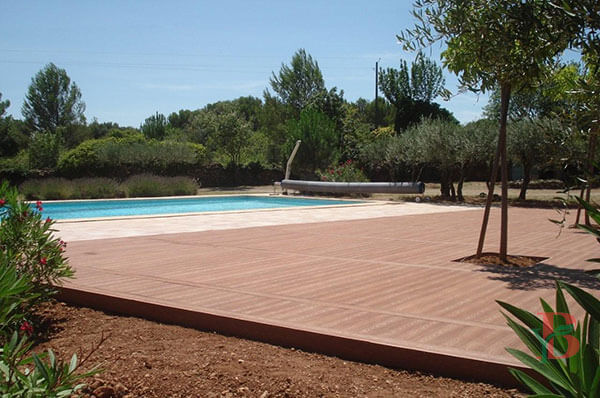
Break the monotony of parallel lines with a professional "picture frame" effect.
- Design Flexibility: Incorporate different colors or patterns into your decking layout.
- Symmetrical Illusion: Use fewer lines and points of contact to create a more pleasing, symmetrical look than standard butt joints.
- Visual Order: Maintain uniformity by breaking long runs into neater, smaller sections that are easier to manage.
Superior Stability & Expansion Control
Eliminate unsightly gaps and buckling while ensuring long-term structural integrity.
- Equal Movement: Allows boards to expand and contract equally to ensure consistent spacing across the deck.
- Enhanced Stability: Distributes weight evenly across different sections to prevent potential sagging or warping.
- Increased Durability: Minimizes moisture penetration and risks of rot, ensuring your deck lasts longer.
Efficiency, Value & Easy Installation
Optimize material use and reduce waste while simplifying your project's logistics.
- Simple Process: Installation is straightforward and requires no special tools or techniques beyond typical building methods.
- Cost Effective: Provides significant added value to the deck without greatly increasing the overall project cost.
- Waste Reduction: Strategically use standard plank lengths to minimize expensive off-cut waste.
Breaker Boards vs. Butt Joints: Which is Better?
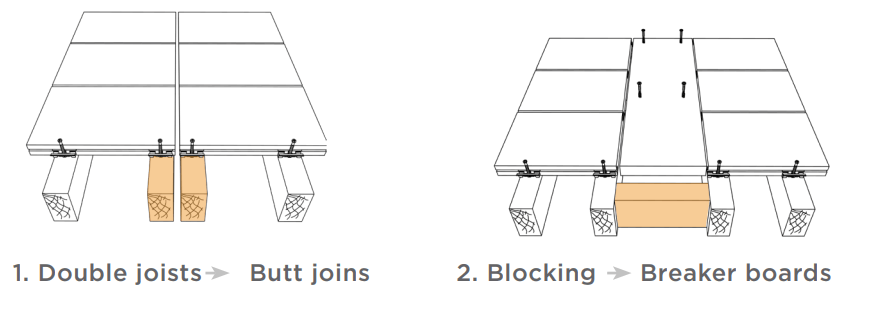
Decking boards tend to expand and contract with changes in temperature and humidity, which can cause problems such as warping, buckling or cracking over time. The problem with using the butt joist stagger method is that it can be challenging to ensure consistent gaps between the deck boards across the entire surface. This may result in uneven spacing between boards in different areas, which could affect both the appearance and functionality of the deck.
For example, if you’re installing a 5.4-meter board, you’ll likely experience a contraction and expansion double the amount that a regular 2.7-meter board will. The boards will contract away and expand into one another, creating overly huge expansion gaps. This can lead to warping and other types of damage to the deck. Attempting to used locking clips to hold the boards in place won’t always work.
Many of the problems you’ll experience with butt joints are alleviated when using a transition boards as an alternate spacing and configuration solution. Breaker or Border boards (boards laid at 90° to the rest of the deck) can be used to create a border around the deck and this will aid in controlling expansion resulting in better.
Instead, it is recommended to use a transition boards to break up long runs of decking, you can ensure consistent spacing between your boards and avoid the creation of huge expansion spacing. A transition board will allow the other boards on your deck to expand and contract equally, as opposed to having them all contracting and expanding at different lengths.
Comparison: Breaker Boards vs. Traditional Butt Joints
| Feature | Traditional Butt Joints | Breaker Boards (Transition) |
|---|---|---|
| Visual Appeal | Random, scattered joints | Professional "Picture Frame Decking" effect |
| Expansion Control | Hard to manage; leads to uneven gaps | Uniformly distributes linear expansion |
| Framing Needs | Requires double joists at every join | Requires a Ladder Joist Configuration |
| Board Stability | Long runs are prone to "creeping" | Independent sections reduce cumulative stress |
| Maintenance | High (debris traps in uneven gaps) | Low (consistent spacing for easy cleaning) |
How to install a deck breaker board?
1.Work out where breaker boards will be positioned on your deck. The substructure of your deck will need to built to support your breaker boards.
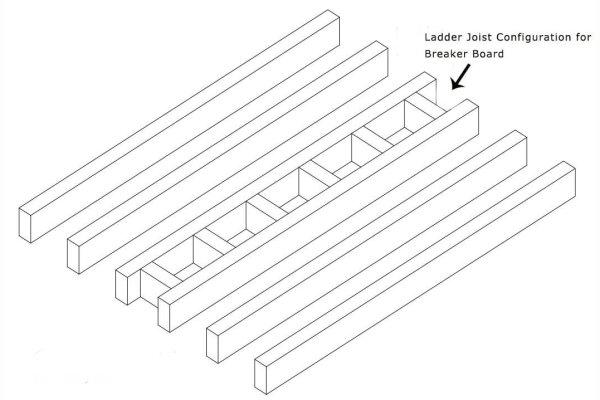
2. The breaker board will need to be top fixed or surface mounted to the ladder joist. Be sure to secure it firmly to the deck frame. This will help prevent warping and other types of damage to the deck over time.
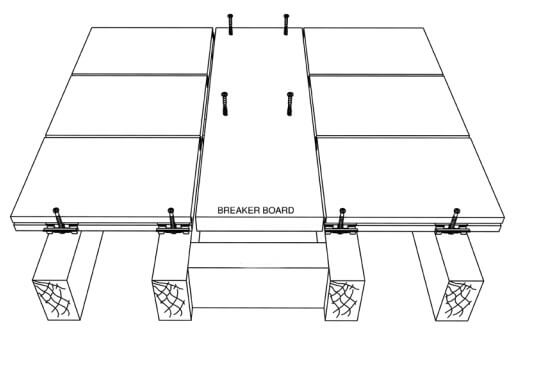
3.Keep expansion gaps between each board to allow for proper expansion and contraction due to temperature changes.
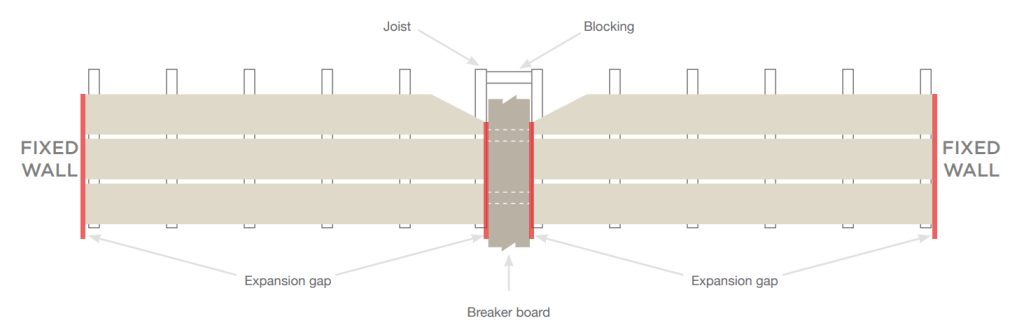
Note: When dealing with composite materials, precision is key. For a standard 5.4-meter board, the expansion can be double that of shorter planks. Follow these specific gap standards:
-
End-to-Breaker Board Gap: Leave a minimum gap of 3mm to 6mm (1/8″ to 1/4″) between the plank ends and the breaker board.
-
Ambient Temperature Rule: If installing in temperatures below 10°C (50°F), use the maximum gap width; if installing in peak summer above 30°C (86°F), the minimum gap is sufficient.
-
Ladder Joist Width: Ensure your blocking/ladder joist is at least 150mm (6 inches) wide to provide full support for the perpendicular breaker board.
4.place the breaker board perpendicular to the other boards at regular intervals.
FAQ: Everything You Need to Know About Deck Breaker Boards
What is the main purpose of a breaker board in composite decking?
The primary purpose is to manage thermal expansion and contraction by breaking up long spans of decking. It eliminates the need for unsightly butt joints and provides a fixed transition point, ensuring consistent spacing and long-term structural integrity.
Are breaker boards better than traditional butt joints?
Yes. Unlike butt joints, which create visible seams and inconsistent gaps, breaker boards offer a “symmetrical illusion” that is much more pleasing to the eye. They provide better weight distribution, preventing potential sagging or warping that can occur over time with end-to-end joints.
Do breaker boards make deck installation more expensive?
On the contrary, they are highly cost-effective. By allowing the use of standard plank lengths, they optimize material usage and significantly reduce expensive off-cut waste. They add significant value to the project without a major increase in the overall cost.
Is it difficult to install a breaker board?
Not at all. Installing breaker boards is relatively simple and straightforward as they require no special tools or techniques beyond typical deck-building methods. The process involves adding “blocking” between joists to support the perpendicular board.
How do breaker boards improve deck durability?
They increase durability by minimizing moisture penetration at joint points, which reduces the risk of rot. By maintaining a neat and uniform layout, they also make the deck easier to manage and maintain over its lifespan.
Do I really need a breaker board for a small deck?
While not strictly necessary for decks under 12–16 feet (where single boards can cover the full span), a breaker board is still a smart choice. It eliminates the need for “butt joints” (where two boards meet end-to-end), which can look messy and uneven over time. Even on a small deck, a transition board adds a professional, custom-designed look and simplifies the framing process.
How does a breaker board handle composite deck expansion and contraction?
Composite decking naturally expands and contracts with temperature changes. Without a breaker board, boards meeting end-to-end can push against each other or create large, unsightly gaps. A breaker board runs perpendicular to the main decking, acting as a controlled “buffer zone.” This allows each section to expand and contract independently without affecting the overall alignment or structural integrity of the deck.
Does installing a breaker board require extra framing?
Yes. To properly install a breaker board, you must add additional blocking or joists underneath where the board will sit. This ensures that both the breaker board and the ends of the main decking boards have a solid surface for fastening. While it requires a bit more prep work, the result is a much more stable and durable deck surface.
Can I use a different color for the breaker board?
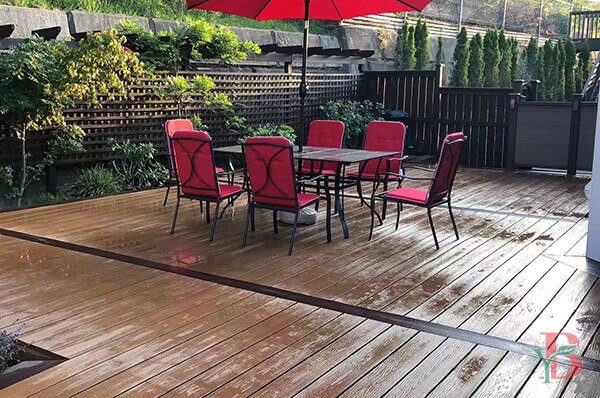
Absolutely! Using a contrasting color for your breaker board (and perimeter “picture frame” boards) is a popular design trend. It helps define different functional areas of your deck—like a dining zone versus a lounging zone—and adds significant visual interest and curb appeal to your outdoor space.
Will a breaker board help prevent tripping hazards?
Yes. Over time, butt joints in composite decking can “mushroom” or become uneven due to thermal movement, creating small lips that people can trip on. A breaker board provides a flat, consistent transition, ensuring a safer, smoother walking surface for your family and guests.
Conclusion: Elevating Your Decking Standards
Elevating Your Decking Standards Investing in a composite deck is an investment in your home’s value and lifestyle. While it might be tempting to overlook technical details, incorporating transition boards is a smart choice that pays off in both aesthetics and long-term durability. Ready to start your project? Don’t let installation gaps ruin your vision.
💡 Pro Tip for Longevity: > Mastering proper installation is key. Discover how to significantly extend your deck’s life with our essential guide: 👉 8 WPC Decking Installation Secrets for 3x Longer Lifespan
For further insights, refer to the following sources:
The Role of Deck Breaker Boards – Trex Protect Joist, Bearer & Rim Tape AU
Deck Building Codes for 2025- What You Need to Know – Grip-Rite
About Guangdong Bongywood New Building Materials Co., Ltd. As a professional manufacturer, we specialize in the R&D and production of premium Wood Plastic Composite (WPC) materials. Our durable, eco-friendly solutions include:
- Decking: Classical Composite Decking, 3D Embossed WPC Decking, Capped Composite Decking
- Outdoor Living: WPC Wall Panels, WPC Railing & Fencing
- Landscaping: WPC Pergolas & Gazebos, Chairs, Benches, and Flower Planter Pots.
Contact us today for expert guidance or a wholesale quote on your next project!