
A composite privacy fence offers an effective way to create a private, attractive, and low-maintenance outdoor space. Made from a combination of wood-based materials and polymers, composite fencing delivers the natural appearance many homeowners prefer while reducing the painting, staining, and frequent maintenance associated with traditional timber fencing.
Whether you are designing a residential backyard, garden boundary, pool area, terrace, or commercial property, modern composite privacy fence panels provide a practical balance of privacy, durability, and contemporary design. This guide explains how composite fencing works, its major benefits, available styles, maintenance requirements, and how it compares with wood and vinyl.
What Is a Composite Privacy Fence?
A composite privacy fence is a fencing system designed primarily to block outside views and create a more secluded outdoor environment. Instead of conventional timber boards, the fence uses engineered composite panels. These are commonly manufactured from wood fiber and polymer materials, which is why composite fencing is also frequently described as WPC privacy fencing.
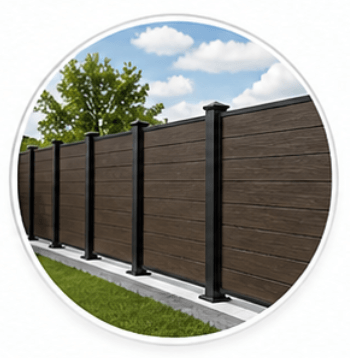
Full-height panels can be installed closely together to reduce gaps between boards and provide significantly more visual screening than open picket or decorative fence styles. Depending on the design, composite panels can be combined with aluminum posts, rails, decorative screens, or contrasting finishing profiles.
Why Choose a Composite Privacy Fence?
Excellent Privacy
Closely fitted composite fence boards create a solid visual barrier, making them suitable for backyards, gardens, swimming pool areas, patios, and other spaces where privacy is important.
Low Maintenance
Unlike many timber fences, a composite system generally does not require regular painting, staining, or sealing. Routine cleaning is usually sufficient for normal residential use.
Consistent Appearance
Modern manufacturing allows composite fence panels to achieve consistent colors, wood-grain textures, and surface finishes across a complete fencing project.
Outdoor Durability
Quality composite fencing is designed for outdoor exposure and avoids many of the maintenance issues associated with untreated natural timber.
Modern Design Options
Homeowners and designers can choose from horizontal boards, vertical layouts, decorative sections, multiple colors, and aluminum-framed systems.
Suitable for Different Projects
Composite fencing can be used for private gardens, residential developments, villas, hotels, commercial landscapes, and other outdoor boundary applications.
Bongywood Composite Privacy Fence represents the next generation of residential and commercial fencing solutions. It is a green, energy-saving, and environmental protection product designed for the modern era.
- Eco-Friendly Innovation: Made from approximately 90% recycled materials – a unique blend of recycled wood fiber and recycled plastic.
- Advanced Co-Extrusion Technology: Unlike standard WPC, Bongywood features industry-leading Co-extruded UV-cap technology. This high-density outer layer provides a superior defense against fading and harsh weather, ensuring your fence looks new for decades.
- The Ultimate Protective “Shield”: Our signature “Cap” acts as a 360-degree protective shield. It hermetically seals the composite core, providing an impenetrable barrier against moisture, insects, and decay.
Bongywood WPC Privacy Fence System
Discover the durability and style of our Aluminum Post Composite Fencing Kit. Featuring co-extruded UV-cap technology and a hidden tongue & groove system for a maintenance-free backyard.
Composite Privacy Fence Pros and Cons
Before choosing a fencing material, it is useful to consider both its advantages and limitations. A composite privacy fence is particularly attractive to buyers who value long-term appearance and reduced maintenance, although the initial material investment can be higher than some basic timber fencing options.
| Advantages | Points to Consider |
|---|---|
| High level of visual privacy | Initial material cost may be higher than basic wood fencing |
| No routine painting or staining required | Correct post spacing and installation are important |
| Consistent wood-look appearance | Colors and profiles vary by manufacturer |
| Multiple modern design options | Replacement components should match the original system |
| Suitable for residential and commercial applications | Project requirements should be checked before ordering |
Popular Composite Privacy Fence Styles
One advantage of composite privacy fencing is the variety of layouts available. The best design depends on the architecture of the property, required privacy level, fence height, and preferred visual style.
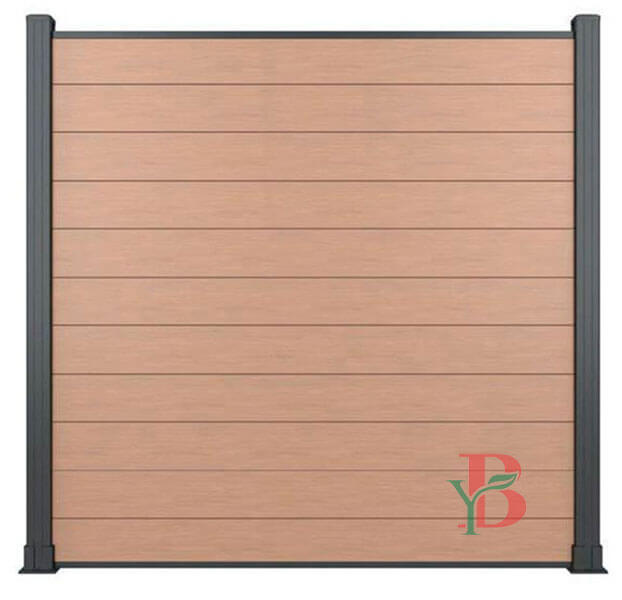
Full Privacy Fence
Total Seclusion: Features interlocking WPC slats with zero gaps for maximum security and a minimalist aesthetic.
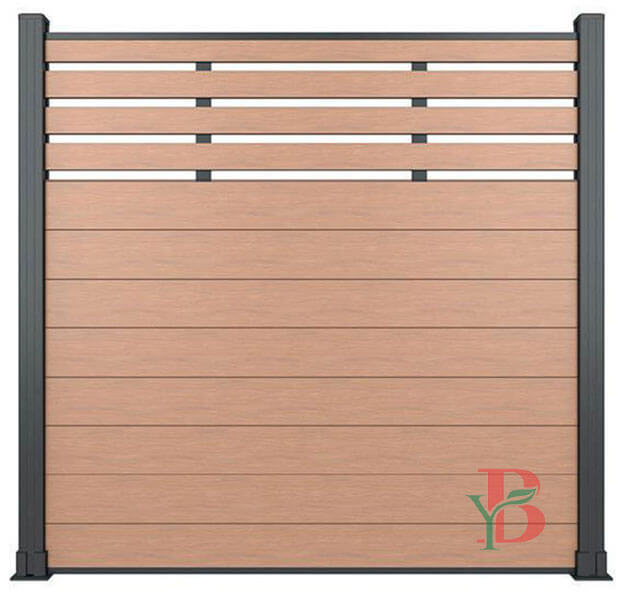
Semi-Privacy Fence
Balanced Elegance: Hollow lower WPC fence panels with slatted tops for natural light and sophisticated airflow.
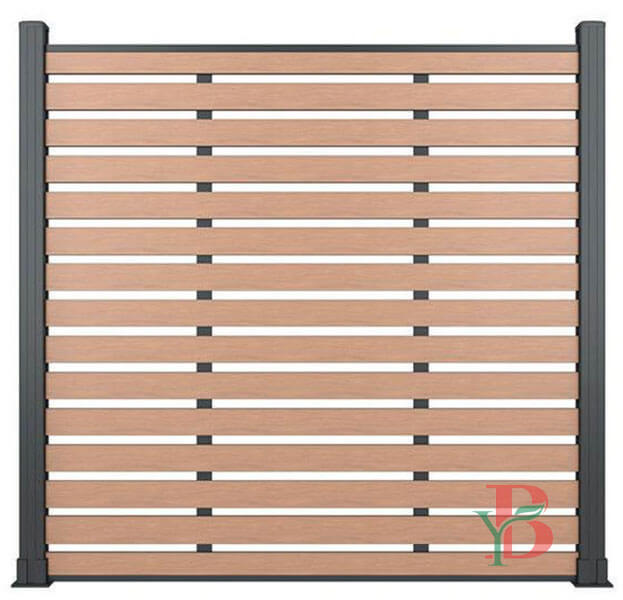
WPC Screen Fence
Architectural Airflow: A contemporary louvered look that prevents spaces from feeling enclosed.
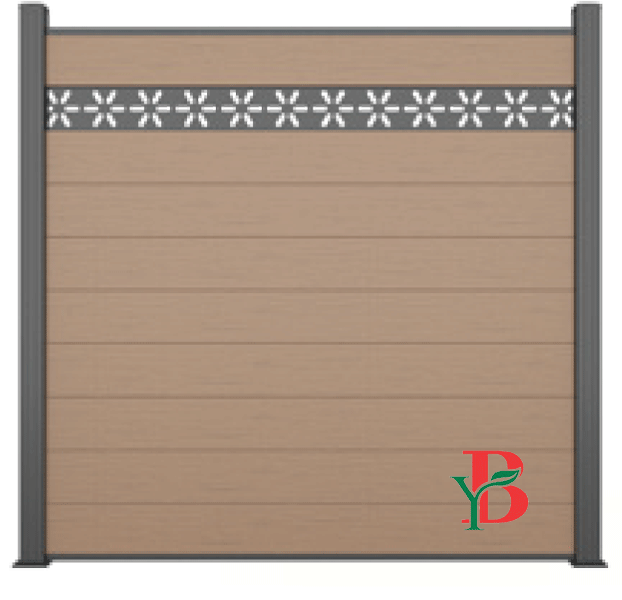
Decorative Privacy Fence
Artistic Flair: Integrated ornamental patterns that turn your boundary into a piece of outdoor art.
Composite Privacy Fence Panels and Components
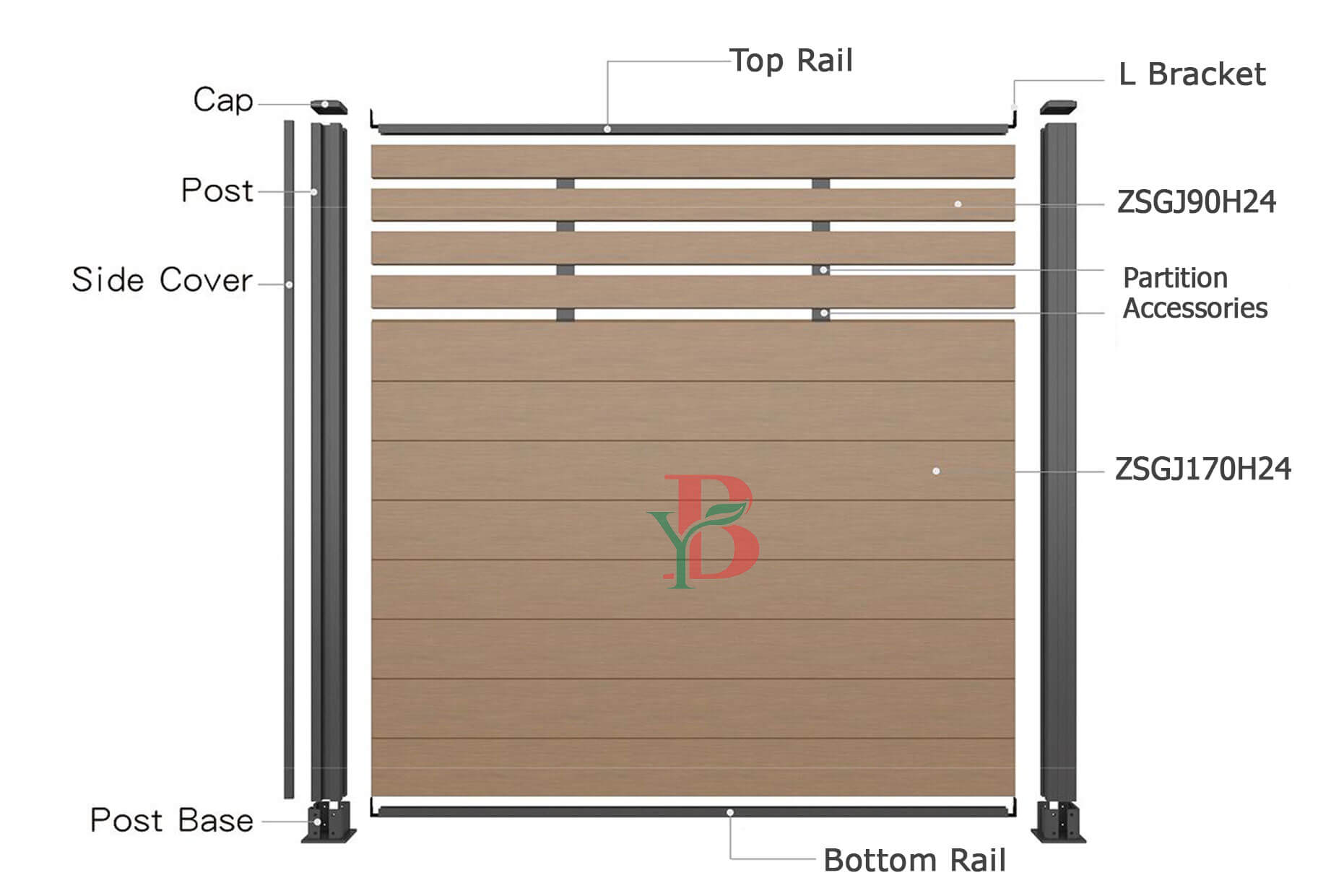


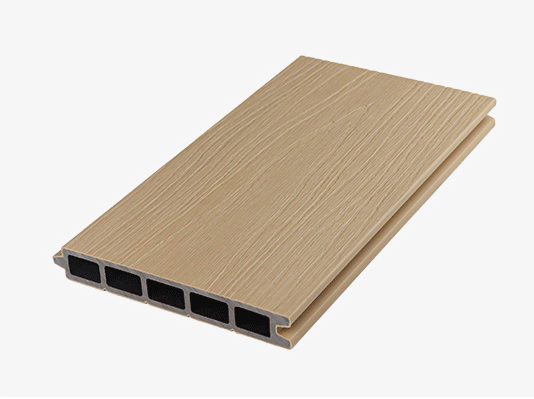


Aluminum Post - Composite Privacy Fence Kit
What’s Included
- 11x WPC Fence Panels
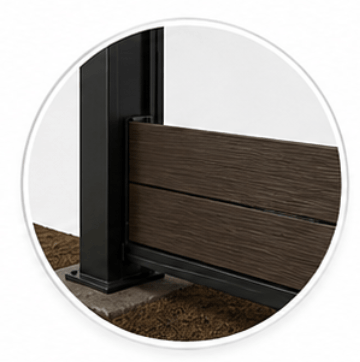
- 1x Aluminum Post & Support
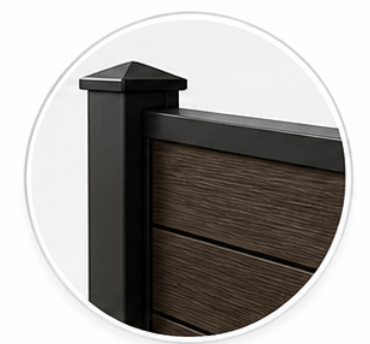
- 2x Cover Rails (Top/Bottom)
- 1x Side Cover & Post Cap
Key Features
- Co-extruded UV-cap: Fade/Stain resistant
- Tongue & Groove: Easy installation
- Durability: High-strength Aluminum posts
- Low Maintenance: No painting/oiling
- 9 Color options available
Composite Privacy Fence vs. Wood Fence
Traditional wood fencing remains popular because of its natural appearance and familiar construction. However, timber normally requires more ongoing care. Depending on the wood species and local climate, owners may need to repaint, stain, seal, or replace damaged sections over time.
A composite privacy fence, by comparison, is designed to provide a wood-inspired appearance with less routine maintenance. For homeowners who prefer not to repaint their fence regularly, this can be an important long-term advantage.
For a more detailed comparison, read our Composite vs Wood Fence: Cost, Durability & Maintenance .
Composite Privacy Fence vs. Vinyl Fence
Composite and vinyl fencing are both popular alternatives to traditional wood, but their appearance and material composition are different. Vinyl fencing typically has a smoother, more uniform surface, while composite products are often designed with textured wood-grain finishes.
| Feature | Composite Privacy Fence | Vinyl Fence |
|---|---|---|
| Appearance | Wood-look textures and contemporary finishes | Smooth and uniform appearance |
| Maintenance | Low maintenance | Low maintenance |
| Design Options | Multiple textures, profiles, and colors | Varies by vinyl fence system |
| Typical Buyer | Users wanting wood appearance with reduced maintenance | Users wanting a simple low-maintenance fence |
For a more detailed comparison, read our composite vs vinyl fence guide .
How Much Does a Composite Privacy Fence Cost?
The cost of a composite privacy fence varies considerably from project to project. Instead of evaluating only the price of an individual fence board, buyers should consider the complete system and installation requirements.
Major factors that can affect the final cost include:
- Total fence length and height
- Composite board profile and finish
- Number and type of aluminum posts
- Decorative screens or customized components
- Gate requirements
- Site preparation
- Labor and installation method
- Order quantity and shipping destination
Although the upfront cost can be greater than a basic timber fence, reduced requirements for painting, staining, and routine refinishing should also be considered when evaluating long-term ownership costs.
How to Install a Composite Privacy Fence
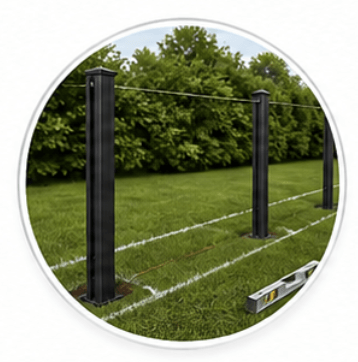
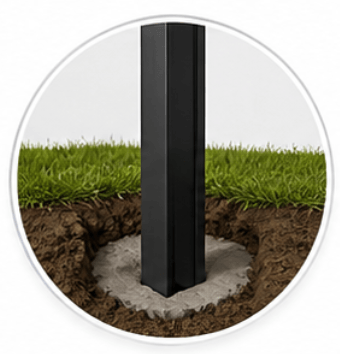
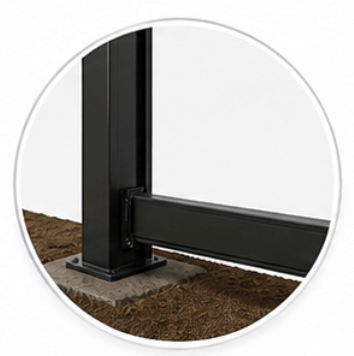
Installation methods vary according to the fence system, site conditions, fence height, and foundation. A typical project starts by planning the fence line and establishing accurate post positions.
How to Maintain Composite Privacy Fencing
One reason buyers choose a composite privacy fence is its relatively simple maintenance. In normal outdoor environments, periodic cleaning can help remove dust, mud, leaves, and surface dirt.
For routine cleaning, use water with mild soap and a soft brush or cloth when necessary. Avoid using harsh chemicals unless they are specifically approved for the fence material by the manufacturer.
It is more accurate to describe composite fencing as low maintenance rather than zero maintenance: every outdoor building material can benefit from occasional inspection and cleaning.
Where Can Composite Privacy Fencing Be Used?
The combination of privacy and modern aesthetics makes composite fencing suitable for many outdoor applications, including:
- Residential backyard boundaries
- Private gardens
- Villas and townhouses
- Swimming pool surroundings
- Patios and terraces
- Apartment developments
- Hotels and resorts
- Commercial landscaping projects
Looking for Composite Privacy Fence Solutions?
Explore WPC fence panels, aluminum-post fencing systems, colors, profiles, and customized solutions for residential and commercial projects.
Frequently Asked Questions About Composite Privacy Fences
Is a composite privacy fence better than wood?
It depends on the project. Composite fencing is particularly suitable for buyers who want a wood-inspired appearance with less painting, staining, and routine maintenance. Natural wood may be preferable when authentic timber appearance is the main priority.
What is better vinyl or composite fencing?
Vinyl fencing is an excellent low-maintenance option, but composite fencing offers superior durability and often greater customization options. If long-term value, durability, and a more eco-friendly choice are priorities, composite fencing may be the better option.
To lean more please review our Composite Fencing vs. Vinyl Fencing: A Comprehensive Comparison page
Does composite privacy fencing require painting?
Composite fence boards are generally supplied with a finished surface and are designed to be used without regular painting or staining. Follow the manufacturer’s care instructions for the specific product.
Does a composite privacy fence fade?
Composite fencing will fade a little after it is exposed to the sun and undergoes the weather. During the first 3 months, the color may fade a little with a approximated percentage of 5% to 10%, this will not affect the overall effect. After that, the color will stay in a stable level through the lifetime of the product.
The anti-UV additives are added to reduce the fading and it will be much suitable for outdoor application.
Can composite privacy fence panels be installed horizontally?
Yes. Many composite fencing systems support horizontal board layouts, creating a modern architectural appearance. Installation should follow the specified post spacing and support requirements of the system.
What is the difference between WPC fencing and composite fencing?
WPC means wood-plastic composite and is a common type of composite material. In the fencing industry, the terms WPC fence and composite fence are often used for systems manufactured from a combination of wood-based materials and polymers.
How does it handle strong winds?
When installed with proper post supports, composite fences offer excellent wind resistance due to the density of the material and the secure interlocking design.
Is composite fencing worth the cost?
Composite fencing tends to have a higher upfront cost compared to traditional wood fencing, it is generally on par with or slightly more expensive than vinyl fencing. However, its long-term benefits make it a cost-effective choice.Composite fencing offers significant long-term savings due to its low maintenance requirements. Unlike wood, which often requires regular staining and sealing, and vinyl, which can become brittle over time, composite fencing demands minimal upkeep. As a result, it can be more cost-effective in the long run, even though the initial investment may be higher.
Can composite fencing be customized in terms of design and color?
Yes, composite fencing can be customized in terms of both design and color. Bongywood composite fencing offer a range of design options to match your preferences, allowing you to choose the style and height that suits your needs. Composite fencing is also available in a variety of colors and finishes, providing flexibility in achieving the look you desire for your outdoor space. Whether you prefer a natural wood appearance, a contemporary design, or a specific color to complement your property, composite fencing offers a range of choices to ensure your fencing aligns with your unique aesthetic preferences.
Can I install a WPC fence myself?
Yes! Our privacy fence panels feature a user-friendly interlocking system, making it an excellent project for DIY enthusiasts and professional contractors alike.