
Choosing between a composite vs wood fence is an important decision for homeowners, contractors, landscape designers, and property developers. When comparing a composite vs wood fence, factors such as cost, durability, maintenance, appearance, and lifespan can significantly influence the final choice.
In this composite vs wood fencing comparison, we examine durability, maintenance, cost, lifespan, appearance, weather resistance, installation, and sustainability. Understanding these differences can help you choose the right fencing material for your garden, backyard, villa, commercial landscape, or privacy fencing project.
What Is Composite Fencing?
Composite fencing is an outdoor fencing material typically manufactured from a combination of wood fibers and polymer materials. It is commonly referred to as WPC fencing or wood-plastic composite fencing.
Modern capped composite fence panels can include a protective co-extruded surface layer designed to improve resistance to moisture, UV exposure, stains, and everyday outdoor weathering. Composite fence systems can also use aluminum posts and rails to provide additional structural support.
Unlike traditional timber boards, composite fence panels do not require routine painting, staining, or sealing. For this reason, they are frequently selected for modern gardens, backyards, villas, pool areas, resorts, and commercial landscape projects where low-maintenance fencing is preferred.
What Is Traditional Wood Fencing?
Traditional wood fencing is made from natural timber such as cedar, pine, redwood, spruce, or other locally available wood species. Its main advantage is its authentic grain, texture, and natural appearance.
Wood can be cut, painted, stained, repaired, and customized in many different ways. However, because it is a natural material, its outdoor performance depends heavily on the wood species, treatment, installation quality, climate, and ongoing maintenance.
Exposure to rain, humidity, insects, and repeated wet-dry cycles can eventually contribute to cracking, warping, decay, or other deterioration if wood fencing is not properly maintained.
Composite vs Wood Fence: Quick Comparison
The following table summarizes the most important differences when comparing a composite vs wood fence.
| Feature | Composite Fence | Wood Fence |
|---|---|---|
| Initial Cost | Generally higher | Generally lower |
| Maintenance | Low; normally no painting or staining required | Regular staining, painting, sealing, or treatment may be required |
| Moisture Resistance | High resistance to moisture and rot | Varies by species and treatment |
| Insect Resistance | Not a food source for termites in the same way natural timber is | Can be vulnerable depending on species and treatment |
| Appearance | Consistent wood-look textures and colors | Authentic natural wood grain |
| Color Options | Multiple factory-finished colors | Can be painted or stained in many colors |
| Weather Resistance | Designed for long-term outdoor exposure | Depends strongly on treatment and maintenance |
| Routine Upkeep | Usually cleaning with soap and water | Cleaning plus periodic protective treatment |
| Long-Term Cost | Higher upfront investment but reduced routine maintenance | Lower initial cost but ongoing maintenance expenses may accumulate |
| Best For | Low-maintenance and modern outdoor projects | Natural timber appearance and lower initial budgets |
Composite vs Wood Fence: Durability and Lifespan
Durability is one of the most important differences in a composite vs wood fence comparison. Outdoor fencing is continuously exposed to sunlight, rain, moisture, temperature changes, insects, and physical wear.
Composite Fencing Durability
- Designed to resist moisture and decay.
- Does not rot in the same way untreated natural timber can.
- Resistant to common insect-related damage.
- Does not require regular staining or sealing.
- Capped surfaces provide additional protection from outdoor exposure.
- Maintains a more consistent appearance over time.
Wood Fencing Durability
- Performance depends on wood species and treatment.
- Can absorb moisture if not adequately protected.
- May crack, warp, split, or decay over time.
- Some species are naturally more durable than others.
- Regular inspection and protective treatment can extend service life.
- Damaged individual boards can often be repaired or replaced.
A well-maintained high-quality wood fence can perform well for many years, but its service life usually depends more heavily on maintenance. Composite fencing is designed to reduce this dependence on recurring surface treatments.
Composite vs Wood Fence: Maintenance Requirements
Maintenance is often the deciding factor for buyers comparing wood vs composite fence materials.
How Much Maintenance Does a Composite Fence Need?
Composite fencing is designed as a low-maintenance outdoor product. Routine care usually consists of removing dirt, leaves, or surface debris and cleaning the panels with water and mild soap when required.
There is normally no need for periodic painting, staining, or sealing. This can reduce both maintenance time and recurring material costs over the life of the fence.
How Much Maintenance Does a Wood Fence Need?
Wood fencing usually requires more regular attention. Depending on the timber, finish, climate, and exposure, maintenance may include:
- Periodic staining or painting
- Application of protective sealers
- Inspection for rot or insect damage
- Replacement of cracked or damaged boards
- Cleaning mildew or organic growth
- Repairing loose fasteners or warped boards
For buyers who want to minimize routine outdoor maintenance, this is one of the strongest advantages of composite fencing.
Composite vs Wood Fence Cost
When comparing composite vs wood fence cost, it is useful to separate the initial purchase price from total long-term ownership cost.
Initial Cost
Traditional wood fencing will often have a lower initial material cost, although the final price varies significantly according to timber species, local labor rates, fence height, design, treatment, and installation requirements.
Composite fencing generally requires a higher upfront investment because of its engineered material structure, manufacturing process, surface technology, and complete fencing system components.
Long-Term Cost
The initial purchase price does not represent the complete cost of a fence. Over time, wood fencing may require stains, paints, sealers, repairs, replacement boards, and additional labor.
Composite fencing reduces many of these recurring maintenance requirements. For projects planned around long-term ownership, maintenance cost and replacement frequency should therefore be considered alongside the initial quotation.
Composite vs Wood Fence: Appearance and Design
Appearance is one area where the choice depends heavily on personal preference and architectural style.
Natural Wood Appearance
Traditional wood offers authentic grain patterns, color variation, knots, and natural texture. For rustic gardens, traditional properties, and projects where genuine timber character is the highest priority, wood remains an attractive choice.
Modern Composite Appearance
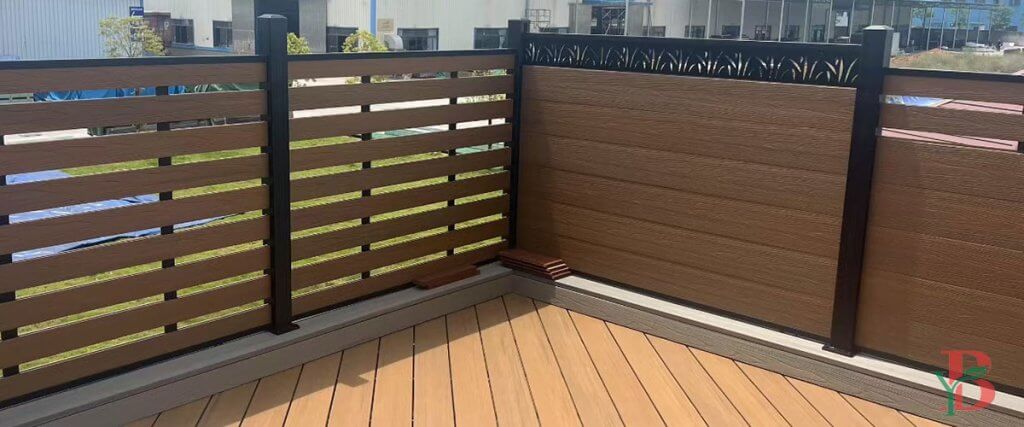
Modern composite fence panels can reproduce wood-grain textures while offering more consistent color and surface quality. Colors such as teak, walnut, brown, charcoal, and grey can be used to coordinate fencing with decking, wall cladding, landscaping, and outdoor furniture.
Composite fencing is particularly suitable for modern privacy fence designs, horizontal slat fencing, villas, contemporary gardens, and commercial outdoor spaces.
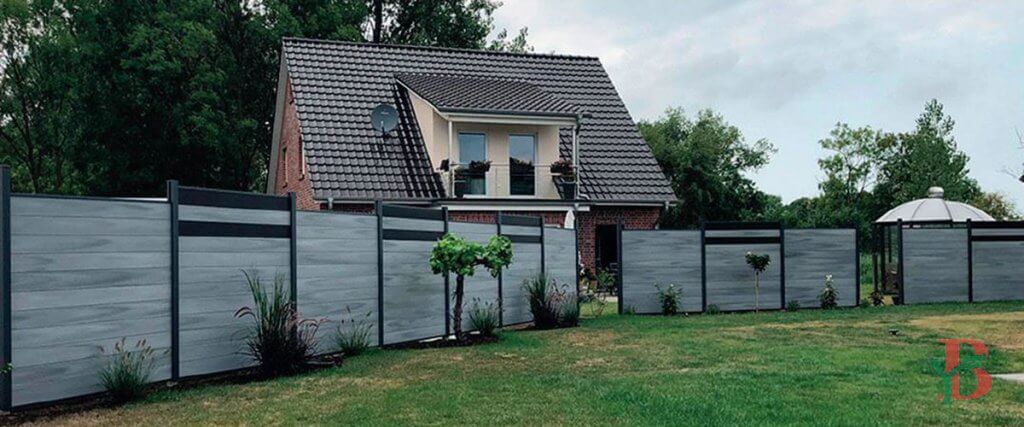
Modern Grey Garden WPC Fence
Lattice-Top Privacy Fence
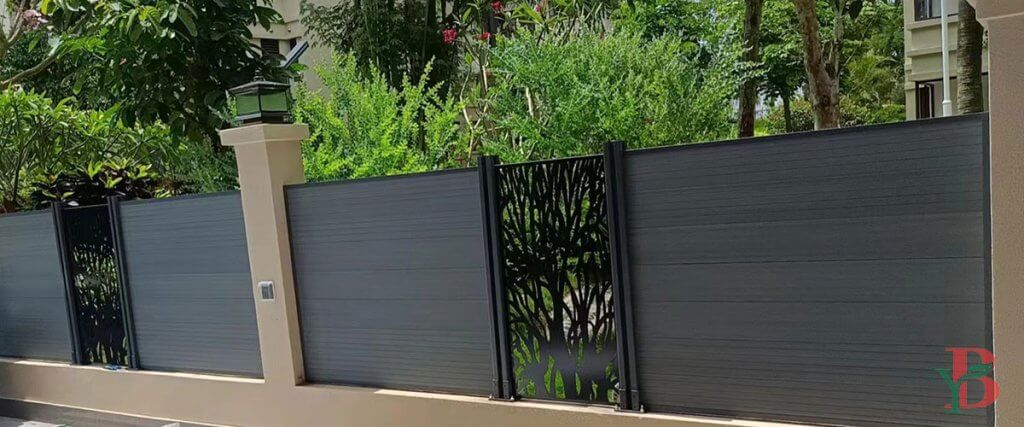
Dark Grey Decorative Composite Fence
Composite vs Wood Fence: Installation
Installation requirements differ according to the specific fence system rather than material alone.
Wood Fence Installation
Traditional wood fencing is familiar to many installers and can usually be cut and adjusted using conventional woodworking tools. Posts, rails, boards, fasteners, and finishing work are assembled according to the chosen fence design.
Composite Fence Installation
Modern composite fence systems can use modular boards, aluminum posts, top and bottom rails, post caps, and concealed connections. This creates a clean finished appearance and simplifies replacement or installation of individual system components.
Correct post spacing, foundation preparation, panel expansion allowance, and manufacturer installation instructions should always be followed.
See our WPC fence panel and installation guide for additional system information.
Composite vs Wood Fence: Sustainability
Installation requirements differ according to the specific fence system rather than material alone.
Sustainability is more complex than simply declaring one material environmentally superior to another.
Natural wood is a renewable material when it comes from responsibly managed forestry, but its environmental impact depends on forestry practices, transport, chemical treatments, maintenance products, and replacement frequency.
Composite fencing can incorporate recycled wood fibers and recycled polymer materials. Bongywood WPC products are manufactured using a high proportion of recycled wood flour+recycled HDPE, helping reduce the demand for virgin raw materials while creating an outdoor product designed for long-term use.
Composite Fencing Pros and Cons
Composite Fence Pros
- Low routine maintenance
- No regular staining or painting required
- Strong moisture and rot resistance
- Good resistance to insects
- Consistent wood-look appearance
- Multiple modern colors and textures
- Suitable for privacy fencing
- Reduced recurring maintenance expenses
Composite Fence Cons
- Higher initial cost than many wood options
- Quality can vary between manufacturers
- Usually heavier than individual timber boards
- Cannot fully reproduce every characteristic of natural timber
- System-specific parts may be required for installation
Wood Fencing Pros and Cons
Wood Fence Pros
- Authentic natural appearance
- Often lower initial material cost
- Can be painted or stained
- Widely available
- Easy to cut and customize
- Individual boards can often be repaired
- Suitable for traditional and rustic designs
Wood Fence Cons
- Requires more regular maintenance
- Can absorb moisture
- May rot if poorly protected
- Can crack, warp, or splinter
- May be vulnerable to insects
- Protective coatings require periodic renewal
- Maintenance costs can accumulate over time
Which Is Better: Composite or Wood Fence?
There is no single fence material that is ideal for every project. The better choice depends on budget, climate, appearance, maintenance expectations, and intended service life.
Choose wood fencing if: you prioritize authentic natural timber, want maximum freedom to stain or paint the material, and prefer a lower initial purchase price.
Choose composite fencing if: you prioritize low maintenance, moisture resistance, consistent appearance, modern privacy fence designs, and reduced dependence on painting, staining, and sealing.
So, which option wins the composite vs wood fence comparison? The answer depends on your budget, climate, design preferences, and willingness to perform ongoing maintenance.For homeowners and commercial buyers who want the appearance of wood without committing to routine timber maintenance, composite fencing provides a strong long-term alternative.
Why Choose Bongywood Composite Fencing?
If your composite vs wood fence comparison has led you toward a low-maintenance solution, Bongywood offers WPC composite fence panels for residential, commercial, landscaping, wholesale, and distribution projects. Bongywood manufactures WPC composite fence panels for residential gardens, villas, pool areas, landscaping projects, distributors, contractors, and commercial outdoor applications.
Our capped composite fence system combines wood-look WPC panels with aluminum posts and rails. The co-extruded surface is designed to improve resistance to moisture, UV exposure, fading, and everyday outdoor weathering.
Low-Maintenance Design
No routine painting, staining, or sealing is required. Regular cleaning can usually be completed with water and mild soap.
Capped Surface Protection
A protective co-extruded surface layer helps protect the composite core from moisture, UV exposure, stains, and weathering.
Wood-Look Finish
Multiple wood-grain textures and outdoor colors provide a natural appearance suitable for modern landscape design.
Complete Fence System
WPC boards, aluminum posts, rails, caps, and installation accessories can be supplied as a complete fencing solution.
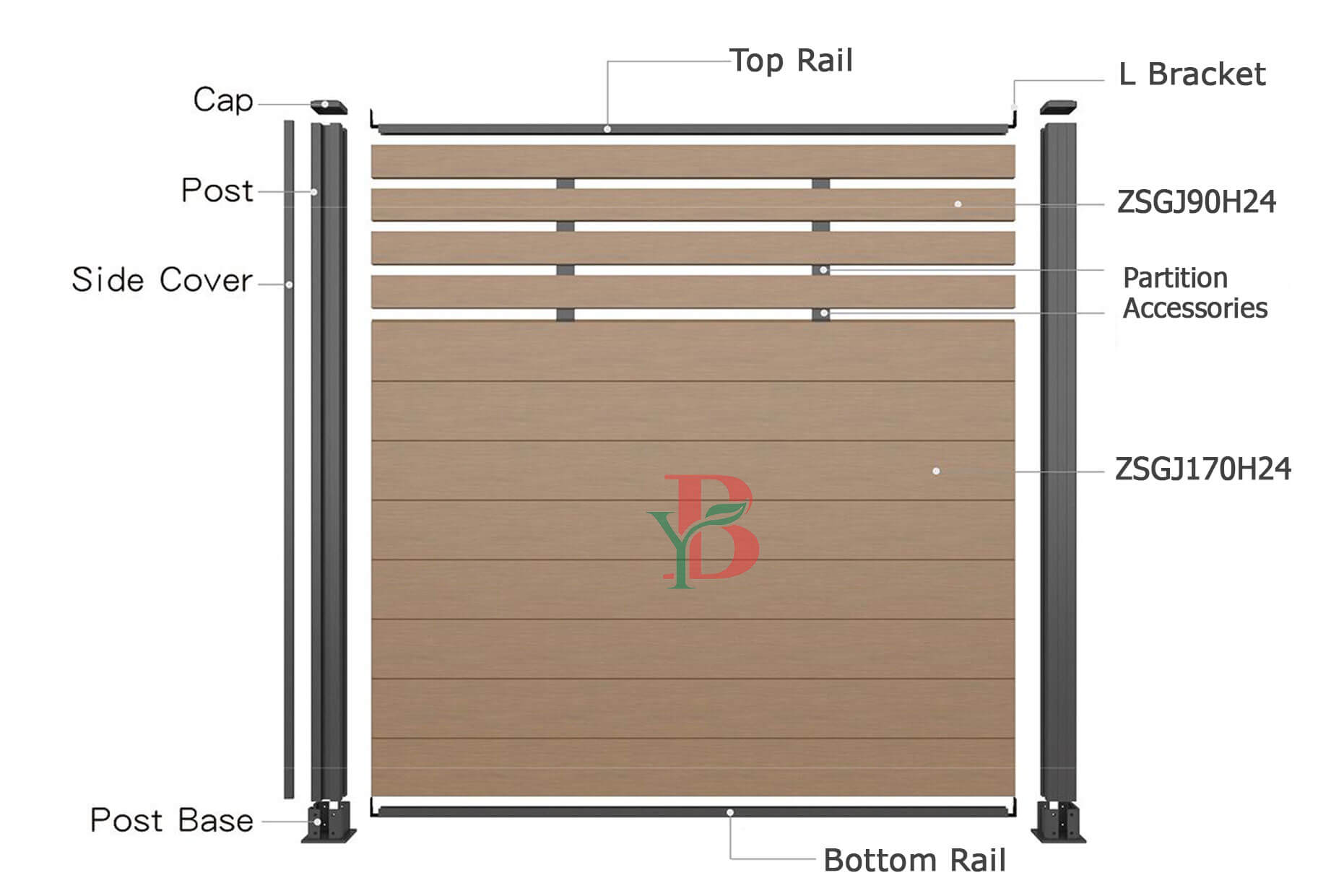


| Overall Size | 1800 mm (L) × 1850 mm (H) |
|---|---|
| Board Size | 170 mm (W) × 24 mm (T) × 1800 mm (L) |
| Post Size | 80 mm × 80 mm × 1850 mm aluminum post |
| Surface | Co-extruded capped surface for outdoor weather resistance |
| Applications | Gardens, yards, pool areas, villas, privacy fencing and commercial landscape projects |
Typical Kit Components
- 11 composite fence boards
- 1 aluminum post
- 1 bolt-down post support
- 2 aluminum cover rails
- 1 side cover
- 1 post cap
View our complete WPC fence panel systems for available styles, specifications and project options.
Looking for Composite Fence Panels?
If you are planning a residential, commercial, landscape, wholesale, or distribution project, Bonywood can provide WPC fence specifications, colors, samples, installation information, OEM/ODM support, and factory-direct quotations.
Frequently Asked Questions About Composite vs Wood Fence
Is composite fencing better than wood fencing?
Composite fencing is generally better for buyers who prioritize low maintenance, moisture resistance, consistent appearance, and reduced routine upkeep. Wood fencing may be better when authentic natural timber appearance and a lower initial cost are more important.
Is composite fencing more expensive than wood?
Composite fencing generally has a higher upfront cost than many traditional wood options. However, wood fencing can require ongoing spending on staining, painting, sealing, repairs, and replacement boards. Comparing total long-term cost gives a more complete picture than comparing initial prices alone.
How long does a composite fence last compared with wood?
Fence lifespan depends on product quality, climate, installation, exposure, and maintenance. Wood performance is strongly influenced by species and protective treatment, while quality composite fencing is engineered for long-term outdoor use with significantly less routine maintenance.
Does composite fencing need maintenance?
Composite fencing requires basic cleaning but normally does not need routine painting, staining, or sealing. Dirt and surface debris can generally be removed using water, mild soap, and a soft brush or cloth.
Does composite fencing rot?
WPC composite fencing is designed to resist moisture and decay and does not rot in the same way untreated natural timber can. Proper installation and drainage are still important for reliable long-term outdoor performance.
Can composite fencing look like real wood?
Yes. Modern composite fence panels can include embossed wood-grain textures and natural-looking colors such as teak, walnut, brown, and grey. Natural wood still provides unique grain variation, while composite provides a more consistent appearance.
Which fence is better for humid or rainy climates?
Composite fencing can be particularly suitable for humid and rainy environments because it is engineered to resist moisture and does not require the same recurring surface treatments as many wood fences. Wood can also perform well when the correct species, treatment, installation, and maintenance system are used.
Does composite fencing & railing fade in the sun?
Composite fencing & railing will fade a little after it is exposed to the sun and undergoes the weather. During the first 3 months, the color may fade a little with a approximated percentage of 5% to 10%, this will not affect the overall effect. After that, the color will stay in a stable level through the lifetime of the product.
The anti-UV additives are added to reduce the fading and it will be much suitable for outdoor application.
Is composite fencing easy to install?
Composite fencing can be straightforward to install when supplied as a complete system with compatible posts, rails, boards, and accessories. Installers should follow the manufacturer’s recommended post spacing, foundation requirements, panel clearances, and assembly instructions.